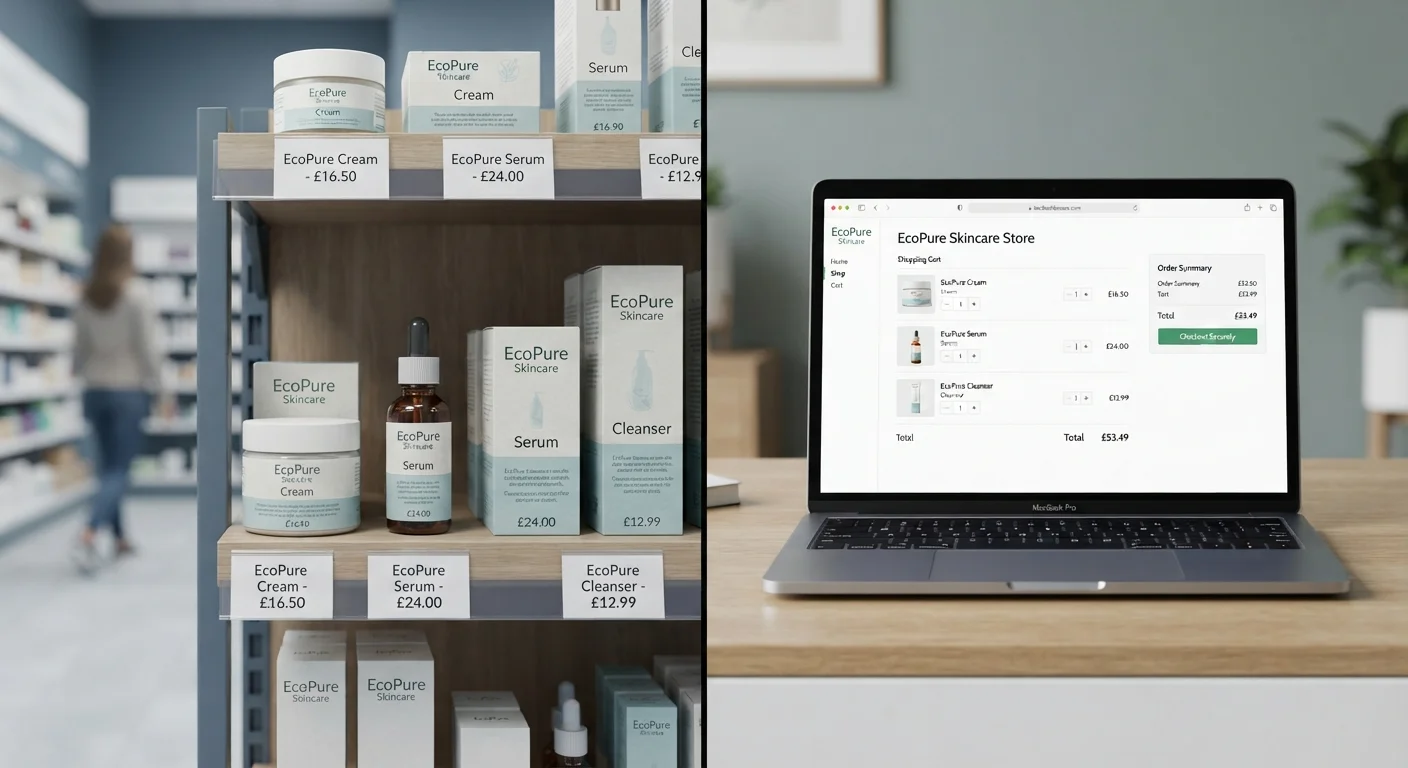
Why the Same Item Costs Different Amounts Across Channels
Walk into a retailer, check the shelf price, then pull up the same product on your phone - and you may find two different numbers staring back at you. This isn't accidental. In-store and online pricing are driven by entirely different cost structures, competitive dynamics, and operational realities.
Physical stores carry overhead that online-only operations largely avoid: rent, utilities, in-store staff, display fixtures, and regional logistics. These fixed costs are built into shelf pricing. Online channels, by contrast, operate with leaner infrastructure but compete in a market where price-comparison is frictionless - anyone can check a rival's listing in seconds. That competitive pressure pushes retailers to adjust online prices frequently, sometimes multiple times per day, a practice called dynamic pricing.
Understanding this gap is the foundation of smart price benchmarking. For a deeper breakdown of how retailers construct their pricing, see our guide to price benchmarking.
| Criterion | In-Store Pricing | Online Listings |
|---|---|---|
| Price stability | Fixed until manually updated | Dynamic, can change hourly |
| Overhead reflected in price | Rent, staff, regional logistics | Warehouse, fulfillment, platform fees |
| Additional costs at checkout | Generally none beyond tax | Shipping, handling may apply |
| Ability to negotiate | Sometimes possible with staff | Rarely possible; automated checkout |
| Price transparency | Single shelf price shown | Multiple seller prices visible |
| Price-match availability | Often available for online rivals | Varies by retailer policy |
| Speed of purchase | Immediate takeaway | Dependent on shipping time |
The Hidden Costs That Complicate the Comparison
A lower listed price online doesn't automatically translate into a lower total cost. Shipping fees, handling charges, third-party seller risks, and return shipping costs can quietly narrow or eliminate a perceived saving. Conversely, some in-store purchases carry trade-in requirements or bundle conditions that inflate the effective price.
Up to 3x/day
Frequency of online price changes for popular items
Research from Boomerang Commerce found that major e-commerce retailers updated prices on high-demand products multiple times daily to respond to competitor activity.
~6-8%
Average price gap between in-store and online for electronics
Studies of consumer electronics retail suggest online listings often run below in-store sticker prices before shipping costs are added, though the gap varies by product and retailer.
Before concluding that one channel is cheaper, tally every cost involved - including the value of your time traveling to a store. As we cover in detail, the lowest listed price isn't always the cheapest option once all fees are factored in.
Category also matters. Electronics pricing tends to be volatile and heavily discounted online, while groceries and household staples show smaller channel gaps. Price volatility differs significantly by product category, so the same comparison strategy won't work uniformly across every aisle or product page.
How to Use Both Channels Together for Better Decisions
The most practical approach isn't to pick a channel and commit - it's to use both as a system. Start online to establish a market price baseline: check multiple listings, note the price range, and look for any available price history data. Then visit a physical store with that information in hand.
Many retailers maintain formal price-match policies between their own online and in-store channels. Asking a floor associate whether the retailer will honor its own online price is a straightforward move that costs nothing and occasionally saves meaningfully.
Be aware that retailers also use psychological pricing techniques to make prices appear more attractive than they are. Price anchoring and sale psychology influence how you perceive value - both on shelf tags and on promotional banners online. Recognizing these tactics helps you evaluate whether a price is genuinely competitive or just framed to feel that way.
For a comprehensive framework covering everything from reading list prices to tracking historical trends, the complete guide to comparing prices is a reliable reference. And if you're working through common assumptions about where to find the lowest price, price comparison myths that cost shoppers money is worth reviewing before your next purchase.