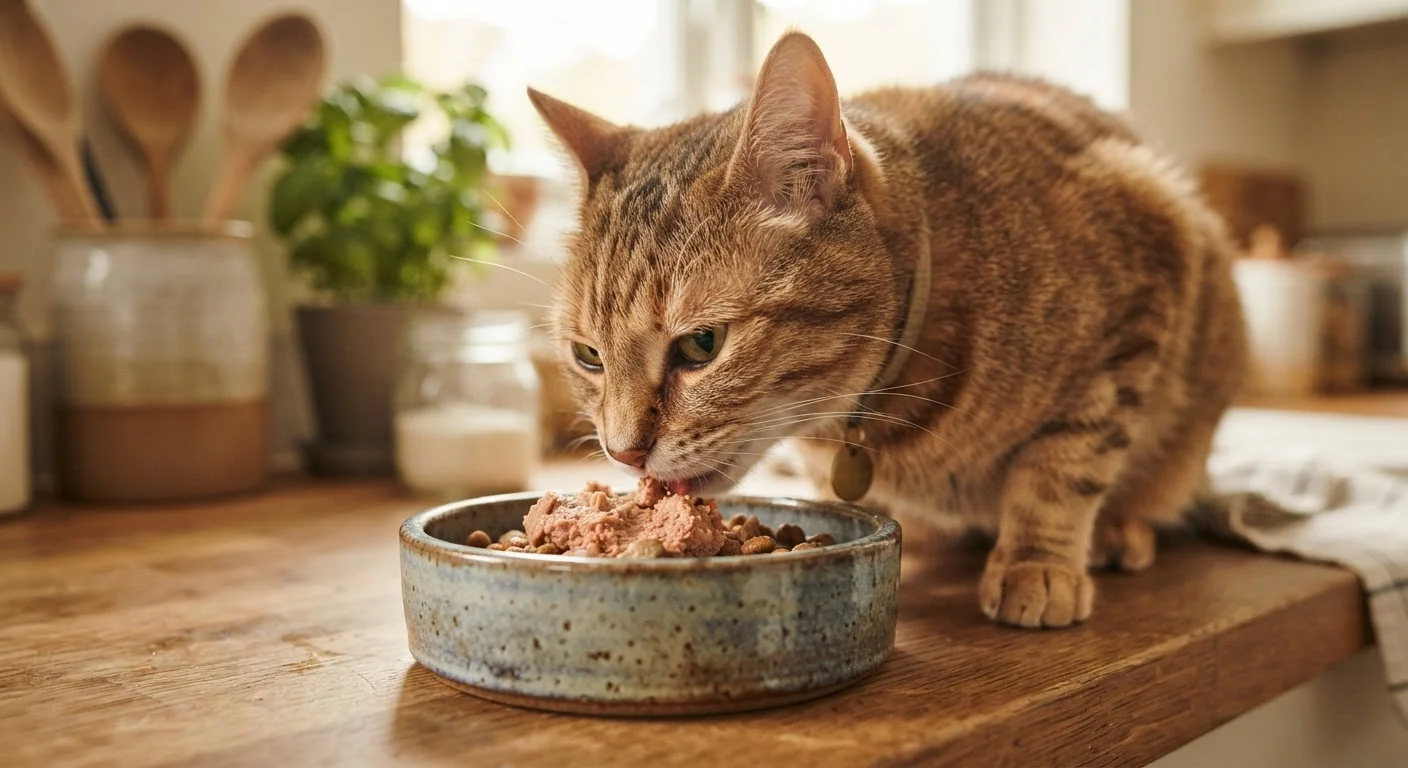
Why Cats Are Obligate Carnivores
The term obligate carnivore means that an animal's physiology is built around a diet of animal flesh - not as a lifestyle choice, but as a hard biological requirement. Cats fall firmly into this category, and it shapes everything about how they should be fed.
Unlike omnivores such as dogs or humans, cats lack several key metabolic pathways that convert plant-based nutrients into usable forms. Their digestive systems are shorter and more acidic, optimized for processing meat quickly. Their livers continuously process protein at a high rate regardless of how much they eat - a trait that makes low-protein diets particularly risky over time.
Understanding this isn't just biology trivia. It's the foundation for every food decision you'll make. For a broader look at your cat's overall wellbeing, the Pet Health & Care hub is a useful starting point alongside nutrition basics.
Obligate carnivore
An animal that must eat animal-based foods to survive because its body cannot produce or convert certain essential nutrients from plant sources.
Taurine
An amino acid cats cannot make in sufficient quantities themselves. It must come from animal protein in their diet and is critical for heart and eye health.
Arachidonic acid
A fatty acid that cats cannot synthesize from plant-based fats. It must be supplied by animal tissue in the diet.
AAFCO
The Association of American Feed Control Officials - a U.S. body that establishes minimum nutritional profiles for commercial pet foods. Look for their adequacy statement on labels.
Dry-matter basis
A method of comparing nutrients in pet foods after removing moisture, so wet and dry foods can be evaluated on equal terms.
Guaranteed analysis
The section of a pet food label showing minimum and maximum percentages of key nutrients like protein, fat, fiber, and moisture.
The Nutrients Cats Cannot Produce on Their Own
Several nutrients that other mammals synthesize internally must come directly from a cat's diet. Getting these wrong - even gradually - can cause serious health problems.
- Taurine: An amino acid essential for heart function, vision, and reproduction. Cats cannot synthesize adequate amounts from other amino acids. Deficiency leads to dilated cardiomyopathy and retinal degeneration.
- Arachidonic acid: A fatty acid cats cannot make from linoleic acid the way dogs and humans can. It must be supplied through animal fat.
- Preformed vitamin A: Cats cannot convert beta-carotene (from plants) into vitamin A. They need retinol, which comes from animal liver and other animal tissues.
- Niacin: Cats have a limited ability to synthesize niacin from tryptophan and need dietary sources.
These gaps explain why homemade or unfortified diets carry real risk. If you're considering cooking for your cat, the Homemade Pet Food guide explains how to approach balance carefully.
Check Every Food for a Taurine Source
When evaluating any cat food - commercial or homemade - confirm that a named animal protein is the primary ingredient and that taurine is listed among the nutrients or supplements. This single check catches one of the most consequential nutritional omissions in feline diets.
Wet Food vs. Dry Food: What the Differences Mean
Both wet and dry cat foods can be nutritionally complete, but they differ in ways that genuinely matter for feline health.
Moisture content is the biggest practical distinction. Wet food is typically 70-80% water; dry food is around 10%. Because cats evolved in arid environments, they have a naturally low thirst drive and may not compensate adequately when fed only dry food. Chronic mild dehydration is associated with urinary tract issues and kidney stress over time.
Protein and carbohydrate ratios also differ. Dry kibble typically contains more carbohydrates - used as binders during manufacturing - than wet food. While cats can metabolize carbohydrates, they don't require them and don't have salivary amylase (the enzyme that begins carbohydrate digestion in humans).
Cost and convenience often favor dry food, but the caloric density means portion accuracy is critical to avoid overfeeding. See our pet food budget guide for practical strategies that don't compromise nutrition.
Reading a Cat Food Label Without Getting Lost
Labels can be confusing, but a few key areas tell you most of what you need to know.
- Ingredient list
- Ingredients are listed by weight before processing. A named animal protein (chicken, salmon, turkey) should appear near the top. Watch for vague terms like "meat by-products" without a named species.
- Guaranteed analysis
- Shows minimum percentages of crude protein and fat, and maximum percentages of fiber and moisture. To compare wet and dry foods fairly, you need to convert both to a dry-matter basis - dividing nutrient percentage by (100 minus moisture percentage).
- Nutritional adequacy statement
- Look for language indicating the food meets AAFCO nutrient profiles for your cat's life stage. Foods labeled "for supplemental feeding only" are not nutritionally complete on their own.
If you're planning a food switch, work through the nutritional readiness checklist first to avoid common pitfalls.
Label Claims Aren't Always Regulated
Terms like "natural," "holistic," or "premium" on cat food packaging have no standardized legal definition in the U.S. and don't guarantee nutritional quality. Focus on the guaranteed analysis and the AAFCO adequacy statement rather than marketing language when evaluating a food.
Adjusting Nutrition Across Life Stages
A cat's nutritional needs shift meaningfully at different life stages, and feeding the wrong formula for too long can create real gaps or excesses.
- Kittens (up to ~12 months): Higher protein, fat, and caloric density to support rapid growth. DHA - a fatty acid important for brain and eye development - should be present.
- Adult cats (1-7 years): Maintenance-focused feeding. Portion control becomes important, especially for indoor cats with lower activity levels. Indoor-specific factors also intersect with nutrition - our article on indoor vs. outdoor cats covers this dimension.
- Senior cats (7+ years): Protein needs remain high or increase; excess phosphorus may stress aging kidneys. Some seniors benefit from highly digestible formulas. Veterinary guidance becomes especially important here.
Body condition - not age alone - should guide feeding amounts. A veterinarian can help you assess whether your cat is at a healthy weight and adjust recommendations accordingly.
This article is for general informational purposes only and is not a substitute for professional veterinary advice. Always consult a licensed veterinarian for guidance specific to your cat's health needs.