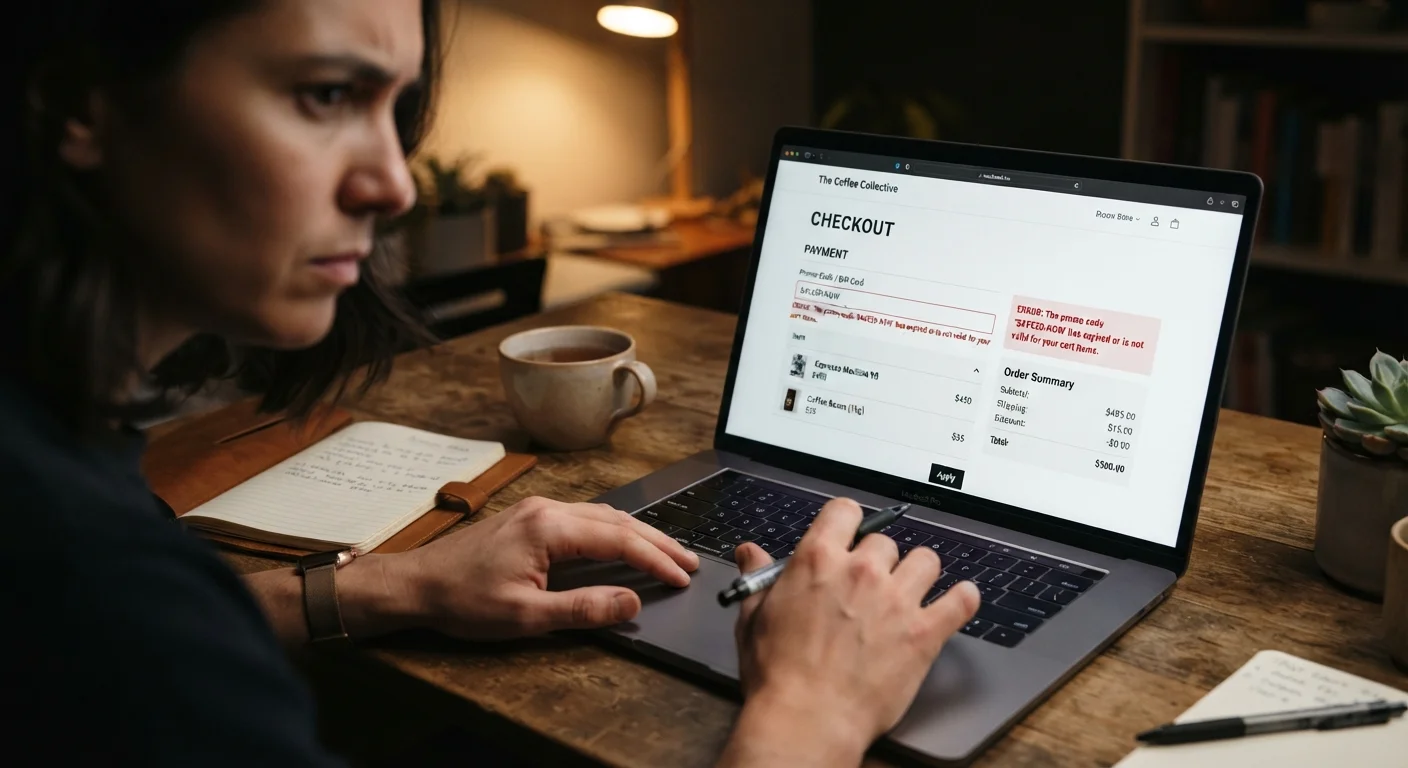
Why Promo Codes Fail More Often Than You'd Expect
You've copied the code, pasted it into the checkout field, and hit apply - only to see "invalid" or "code not found." It's one of the more common frustrations in online shopping, and the cause isn't always obvious. Before you assume the deal was a scam or the site is broken, it helps to understand the mechanics behind why codes stop working in the first place.
Promo codes are deliberate, controlled tools. Retailers issue them with built-in restrictions that limit who can use them, when, and how many times. Those constraints exist by design. For a fuller picture of how codes are structured, see our explainer on how promo codes work. Understanding that structure is the first step toward troubleshooting a failure efficiently.
How to Find a Working Code When One Fails
When a code doesn't work, the fastest path to a valid alternative is to go directly to the retailer's own channels. Check the retailer's email newsletter, their official social media accounts, or their loyalty program dashboard. These are the sources where codes are distributed with the fewest downstream errors - no copying mistakes, no outdated aggregator pages.
60%+
Shoppers who searched for a code before buying
Research by RetailMeNot has indicated that a majority of online shoppers look for a discount code before completing a purchase, making code reliability a significant checkout factor.
~30%
Publicly shared codes that are already expired
Industry estimates suggest roughly a third of codes found on coupon aggregator sites are no longer active at the time a shopper attempts to use them.
Third-party coupon sites can be useful, but they have a well-documented freshness problem: codes get posted once and left up long after they've expired or hit their redemption cap. If you do use aggregator sites, filter by recently added or user-confirmed codes, and read the comments - other shoppers often flag when a code has stopped working.
It's also worth considering why the code was issued in the first place. Retailers segment their offers by customer behavior - new visitors, lapsed customers, loyalty members, and cart abandoners all receive different codes targeting their specific situation. Our article on how retailers decide who gets a promo code explains this logic in detail, and knowing it can help you identify which channel is most likely to surface a code that applies to your account.
Creating Duplicate Accounts Has Real Consequences
Some shoppers create new accounts to access "new customer" promo codes after their original account is ineligible. Retailers routinely detect duplicate accounts using email addresses, device fingerprinting, and payment details. This can result in order cancellation, account suspension, or being permanently flagged in a retailer's system - outcomes that cost far more than the discount would have saved.
Finally, if no working code is available, consider whether the retailer offers price-match policies, cashback portals, or browser extensions that surface on-site discounts automatically. These alternatives often capture savings that promo codes would have provided anyway, without the trial-and-error of code hunting. For related misconceptions that can lead shoppers astray, see our piece on coupon myths that cost shoppers money.