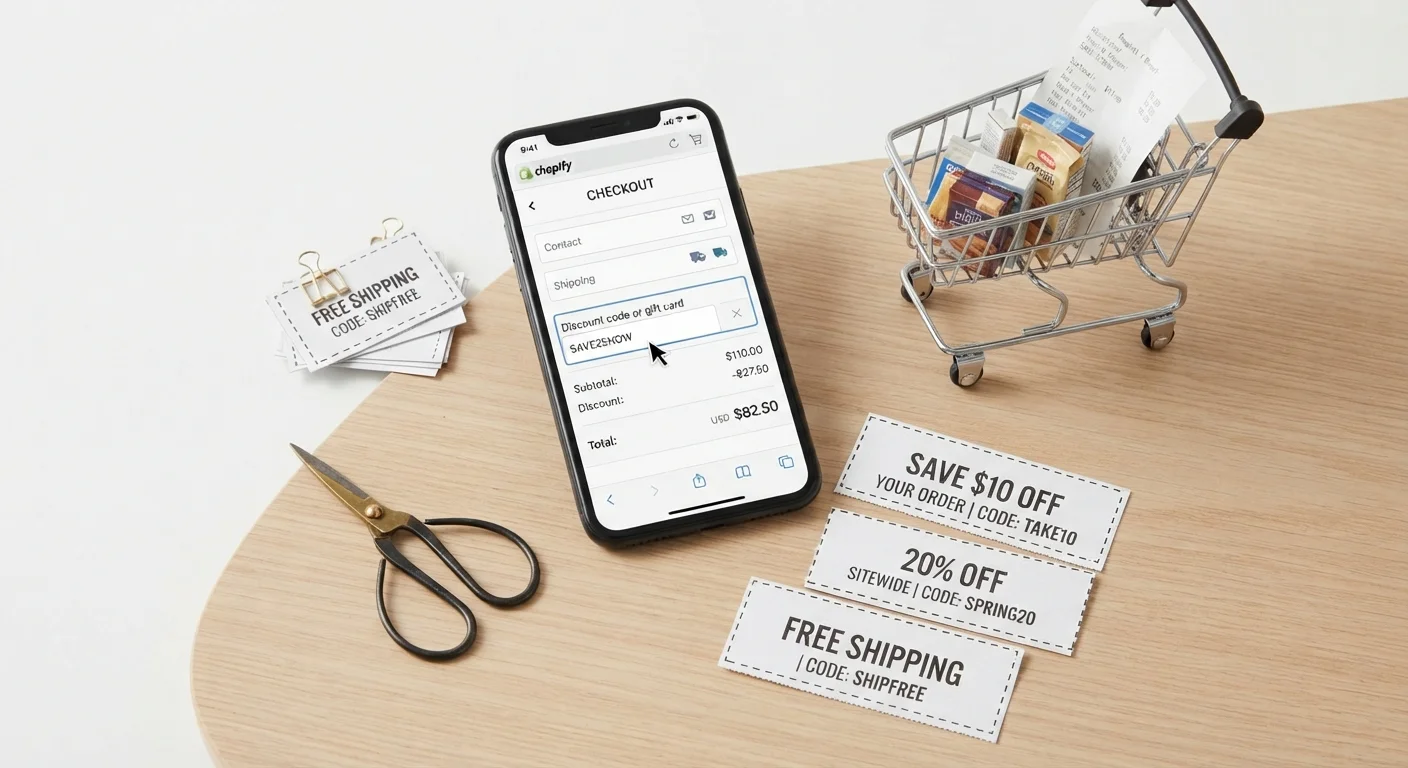
The Core Mechanics: How a Code Becomes a Discount
When you enter a promo code at checkout, the retailer's system looks it up in real time. If the code exists, is still active, and the cart meets any attached conditions, the discount is applied before payment is processed. The entire validation happens in seconds, but the rules checked in that moment determine whether you save anything at all.
Those rules typically cover four things: the code string itself (must match exactly, including capitalization in some systems), the expiry date, any minimum order value, and product or category exclusions. A code offering 20% off clothing may silently exclude sale items or specific brands - a detail buried in the promotion's fine print. See the plain-language breakdown of promo code terms for a full walkthrough of common conditions.
88%
US consumers who used coupons in a recent year
According to Statista consumer surveys on coupon usage behavior in the United States.
$1.8B+
Digital coupons redeemed annually in the US
Industry estimates from coupon market research tracking digital redemption trends across online and in-app channels.
60%
Shoppers who search for codes before buying
RetailMeNot consumer research found most online shoppers look for a discount code before completing a purchase.
Types of Discounts a Code Can Apply
Not all codes do the same thing. Understanding the discount type helps you evaluate whether a code is worth using on a given order:
- Percentage off: Reduces the subtotal by a set proportion (e.g., 15% off the entire order). More valuable on larger purchases.
- Flat dollar amount: Deducts a fixed sum (e.g., $10 off). More valuable on smaller orders where the fixed amount represents a higher share of the total.
- Free shipping: Waives the delivery fee. Can be one of the highest-value code types if you're ordering one or two items where shipping is a significant cost.
- Buy-one-get-one (BOGO): Grants a free or reduced-price item when another is purchased at full price. The value depends on whether you actually need two units.
- Tiered discounts: The savings scale with spend (e.g., $10 off $50, $25 off $100). These encourage larger carts, so assess whether you'd buy those extra items anyway.
Comparing discount types across competing retailers is a practical step before committing to a purchase. Price comparison strategies can complement code-hunting by ensuring you're applying a discount to a genuinely competitive base price.
Where Codes Come From - and Why It Matters
Retailers don't distribute codes randomly. They're generated with specific goals: attracting new customers, rewarding loyalty members, recovering abandoned carts, or clearing inventory. The origin of a code often determines how it behaves. How retailers target and distribute promo codes explains the logic behind these decisions in detail.
Broadly, codes fall into two categories:
- Public codes: Shared openly via email campaigns, social media posts, or affiliate sites. Anyone can use them, and they're typically valid for a set window of time.
- Single-use codes: Generated uniquely for one account or transaction. They expire after one redemption and cannot be shared. These are common in loyalty programs and cart-abandonment emails.
Knowing the difference matters because single-use codes found on public coupon sites are often already redeemed - and won't work for you. For a deeper look at this distinction, see single-use vs. public promo codes explained.
Check Terms Before Adding Items to Your Cart
Before building an order around a promo code, read the attached conditions first. Minimum spend requirements, excluded categories, and expiry dates are the most common reasons codes fail. A few seconds reviewing the fine print prevents wasted time at checkout.
Stacking, Limits, and Common Pitfalls
Stacking refers to applying more than one discount to a single order - for example, using a promo code alongside a loyalty reward or a store credit. Some retailers explicitly allow one promotional code plus one loyalty discount. Others restrict each order to a single code, full stop.
Common pitfalls that lead to codes failing at checkout include: entering the code in the wrong field, having items in the cart that are excluded from the promotion, not meeting the minimum order threshold, and attempting to use a single-use code that's already been redeemed. Many shoppers also overlook that some codes apply only to regular-priced merchandise and not to items already marked down.
It's worth approaching coupon use with realistic expectations. Common coupon myths that cost shoppers money covers widespread misconceptions - including the belief that stacking always works or that all codes offer equivalent value.
For practical ways to find valid, working codes before checkout, browser extensions vs. coupon websites compares two of the most widely used discovery methods. Both have strengths and limitations worth understanding before relying on either.