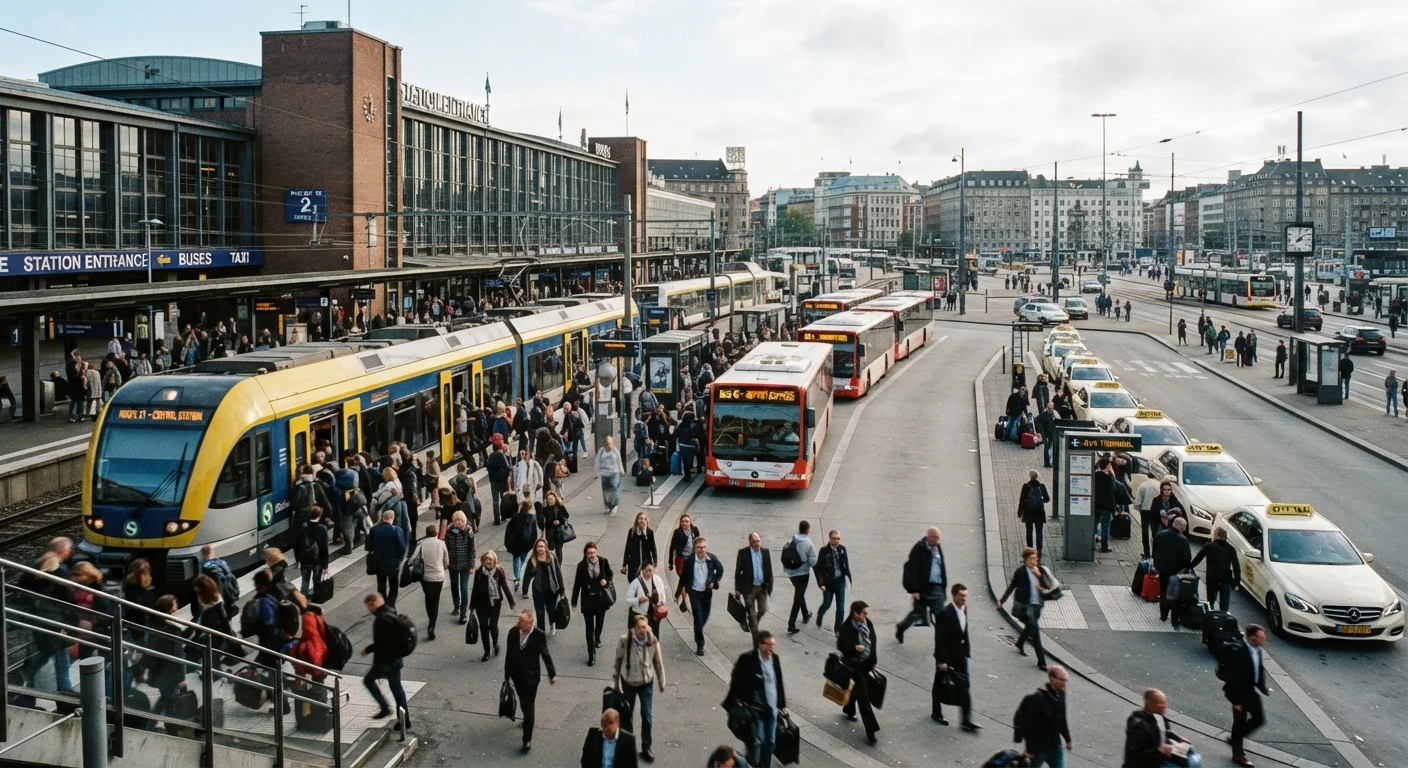
Why Ground Transport Deserves Attention in Your Budget
Flights and hotels dominate travel planning conversations, but ground transport can quietly consume a significant share of daily spending - especially on longer trips or in expensive cities. A week of taxis in a major European capital, for instance, can easily cost as much as a budget flight within the region. Getting this right is a meaningful lever. See how it fits into the broader picture in our end-to-end budget framework for a full trip.
Each transport type has a genuine use case. The goal isn't to always choose the cheapest option - it's to choose the right tool for each situation. What follows is a direct comparison across cost, convenience, reliability, and context.
| Trains / Metro | Local Buses | Ride-Hailing Apps | Taxis | |
|---|---|---|---|---|
| Typical cost (solo) | Low | Lowest | Moderate | Moderate-High |
| Cost for groups (3+) | Low per person | Lowest per person | Often competitive | Can be competitive |
| Price predictability | Fixed fares | Fixed fares | Variable (surge) | Varies by meter or negotiation |
| Coverage | Urban corridors | Broad but slower | Most cities globally | Widest, including rural |
| Late-night availability | Limited in many cities | Limited | Generally available | Available but pricier |
| Cash required | Sometimes | Often | No (app payment) | Usually yes |
| Navigation difficulty | Low with transit card | Moderate | Low (app handles it) | Low |
Trains and Metro Systems: The Default for Urban Efficiency
In cities with developed rail networks - think metro systems in New York, Tokyo, Paris, or Mexico City - trains are typically the fastest and most affordable way to move. Fixed fares eliminate guesswork, and frequent service means minimal waiting. Transit cards (IC cards, Oyster cards, reloadable passes) usually offer a per-ride discount over cash fares and remove the friction of buying individual tickets.
Day passes are worth calculating before dismissing. If you plan four or more paid rides in a day, a day pass frequently breaks even or saves money. Check the local transit authority's website before arrival rather than at the gate. Japan's layered train system is a useful example of how much prep pays off - see our guide on navigating Japan's transit network before visiting.
Buy Your Transit Card Before Exploring
Many cities sell reloadable transit cards at airports, reducing friction on day one. Load enough balance for two to three days upfront - single-trip cash fares are often 20-40% more expensive than card fares for the same journey. Check whether the card is transferable between transit modes (bus + metro on one card) before purchasing a separate card for each.
The main drawback: trains don't go everywhere. Outer neighborhoods, rural areas, and late-night travel are gaps that other options must fill.
Buses: Slower but Often the Most Affordable Option
Local buses extend coverage where rail ends, and in many cities - particularly in Southeast Asia, Latin America, and parts of Europe - they're the primary transit mode. Fares are typically lower than metro fares, and route networks are broader. The trade-off is speed and predictability: buses share road space, making journey times variable.
For travelers comfortable with some navigation uncertainty, buses offer genuine value. Many cities now publish real-time bus tracking through municipal apps or Google Maps integration, which reduces the guesswork considerably. Long-distance buses between cities - coach services - can also be substantially cheaper than trains on the same corridor, though travel times are longer.
Ride-Hailing Apps: Convenience With a Price Ceiling
Services that let you book and pay through a smartphone app have become standard infrastructure in most major cities globally. The primary advantage is price transparency: you see the fare before confirming. This removes the negotiation variable common with street taxis and makes budgeting straightforward.
The catch is surge pricing. During peak commute hours, bad weather, or major events, fares can multiply by two or three times the base rate. If your schedule is flexible, waiting 15-20 minutes for surge pricing to subside is a practical tactic. Payment through the app also means you don't need local cash - a meaningful convenience when you've just arrived. For more on managing currency on arrival, our currency exchange reference guide covers your options.
Ride-hailing makes particular economic sense for groups. Three people splitting a ride-hail fare often pay less per person than three separate transit fares, especially for airport runs or late-night travel. Our comparison of solo vs. group travel costs breaks this dynamic down further.
Taxis: Still Relevant, But Require Attention
Street taxis remain the dominant option in many destinations where ride-hailing apps haven't penetrated deeply, or where local regulations limit app-based services. In these contexts, metered taxis are the most reliable choice - the meter provides an objective fare calculation. Always confirm the meter is running before the journey starts.
In destinations where meters aren't standard, agree on a fixed fare before you get in. This is non-negotiable - a vague agreement mid-journey puts you at a disadvantage. Asking your accommodation staff what a reasonable fare to a common destination should cost gives you a usable benchmark. Official taxi ranks at airports, train stations, and major hotels generally carry lower risk of price manipulation than vehicles flagged down on the street.
Unofficial Taxis Carry Real Risk
Drivers soliciting passengers inside airport terminals or at tourist sites without a meter or official markings are a common source of overcharging. Use official taxi ranks, insist on a meter or a pre-agreed fare, and when in doubt, a licensed ride-hailing app with an upfront price offers a safer alternative. If you're unsure what official taxis look like in a given country, check government travel advisories before you arrive.