The Architecture of Japan's Rail Network
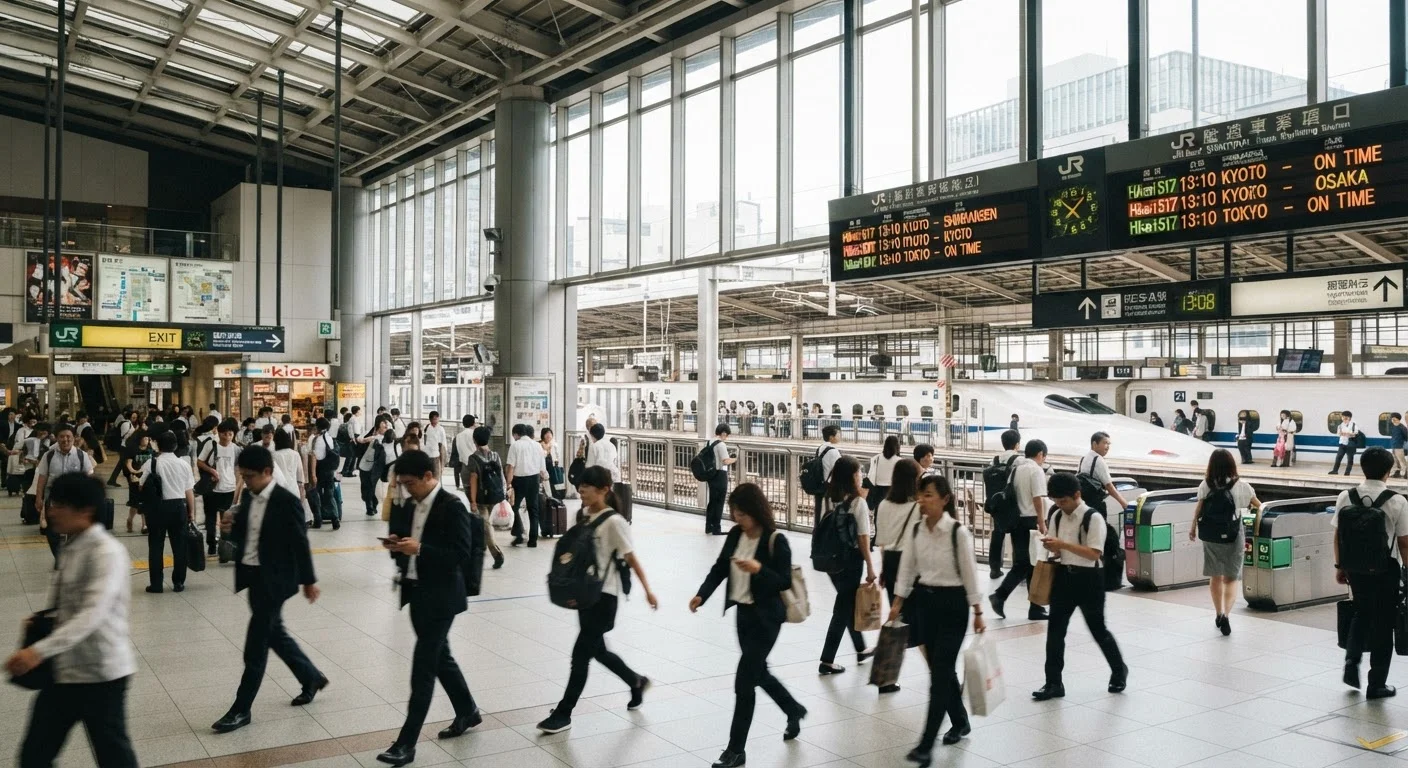
Japan's transit system is best understood as a series of overlapping networks rather than a single unified system. At the intercity level, the shinkansen (bullet train) connects major cities at speeds up to roughly 320 km/h with near-perfect punctuality. Below that sit JR limited express and local trains, which handle regional routes. Then come private railways - dozens of companies operating their own suburban and intercity lines - followed by city subways, trams, and buses.
The critical thing to understand before you arrive: these operators are separate businesses. A single journey from a Tokyo suburb to Kyoto might involve a private railway to the JR station, a shinkansen on a JR Pass, and a city subway at the other end paid by IC card. Knowing how these layers connect - and what each payment method covers - saves real time and money on the ground.
For a broader comparison of how Japan's approach differs from other transit-heavy destinations, see our guide to ground transport options worldwide.
IC Cards: The Practical Daily Tool
For day-to-day movement within and between cities, an IC card is the most versatile instrument in your wallet. Suica (JR East) and ICOCA (JR West) are the two most widely used, but Pasmo, Manaca, and several regional cards exist - and most work interchangeably on transit networks nationwide.
You load yen onto the card, tap in at the station gate, tap out at the destination, and the correct fare is automatically deducted - no hunting for the right ticket price on a fare map. IC cards also work on most city subways, buses, and even some convenience stores and vending machines.
Load Your IC Card Before Leaving the Airport
IC cards can be purchased and loaded at automated machines in most major Japanese airports, including Narita, Haneda, and Kansai International. Starting your trip with a loaded card means you can tap through the first subway gate without hunting for change or decoding a ticket machine under time pressure. Aim to load at least ¥3,000-¥5,000 to cover the first day or two of local travel.
One practical limit: IC cards don't cover shinkansen fares. For bullet train travel, you'll need either a separate ticket purchased at the station (or online in advance) or a JR Pass if your itinerary warrants one.
JR Pass, Point-to-Point Tickets, and Night Buses
The JR Pass is a fixed-period unlimited-travel pass available to foreign visitors, covering most JR-operated shinkansen, limited express, and local trains. It's a genuine value for itineraries involving multiple long-distance legs - say, Tokyo, Kyoto, Hiroshima, and Fukuoka within two weeks. For a trip concentrated in one city or region, individual point-to-point tickets typically cost less.
~2,764 mi
Total shinkansen route length in Japan
Japan's Ministry of Land, Infrastructure, Transport and Tourism reports the shinkansen network spans over 2,700 miles of dedicated high-speed rail lines across the country.
99.9%
Shinkansen on-time arrival rate
JR operators publish annual punctuality reports consistently showing average delays under one minute across the shinkansen network.
13
Tokyo subway lines across two operators
Tokyo Metro and Toei operate separate subway networks within the city, each requiring their own fare payment unless bridged by an IC card or combined day pass.
Night buses (highway coaches) deserve attention as a serious budget alternative. A Tokyo-to-Osaka overnight bus typically costs a fraction of the equivalent shinkansen fare. You sacrifice daytime travel time but gain a night's accommodation cost savings - a trade-off worth calculating for multi-city trips that don't depend on daytime arrival.
If your itinerary includes a layover at Narita or Kansai International, our layover city access guide explains how airport rail connections work globally and how to assess whether exploration is worth the effort.
Navigating Tokyo's Urban Web
Tokyo's transit is its own puzzle. The city has 13 subway lines operated by two separate companies (Tokyo Metro and Toei), plus an extensive JR network including the famous Yamanote Line loop, plus numerous private railways connecting outer suburbs. All of these are bridged by IC card, but passes covering one operator's subway lines don't automatically include another's.
For most visitors, the pragmatic approach is: use an IC card for all subway and local rail travel; buy a separate shinkansen ticket when leaving the city. Transit apps such as Google Maps and Hyperdia are reliable for routing across all operators and will display fares clearly.
Understanding the transit map pays dividends beyond mere logistics. Tokyo's neighborhoods are genuinely distinct - and being comfortable with rail unlocks areas most visitors miss. Our Tokyo neighborhood guide covers districts worth the detour once you have rail navigation sorted.
Transit Apps Work Well, But Verify JR Pass Coverage
Routing apps like Google Maps and Hyperdia accurately display routes and fares across all Japanese transit operators. However, they show standard ticket prices - not JR Pass coverage. Always cross-reference your specific shinkansen or limited express leg against the official JR Pass route map to confirm it's included, as some services (notably the Nozomi and Mizuho on the Tokaido-Sanyo Shinkansen) are excluded from the standard pass.