Why Neighbourhood Choice Shapes the Whole Trip
Tokyo is not one city - it's closer to 20 distinct towns threaded together by one of the world's most reliable rail networks. Most first-time visitors spend the bulk of their time in Shinjuku, Shibuya, and Asakusa. Those are legitimate choices, but they don't represent how most Tokyoites actually live, eat, or spend a Sunday afternoon.
Choosing even one or two less-trafficked districts per day changes the texture of a trip entirely - the budget, the pace, the food, and what you actually remember. Researching neighbourhoods before you arrive prevents the common mistake of showing up with a generic itinerary and realising too late that you've missed what makes Tokyo genuinely interesting.
The six districts below reward deliberate attention. Each has a different draw, a different crowd profile, and honest trade-offs worth knowing before you commit a half-day.
Yanaka - Old Tokyo Without the Reconstruction
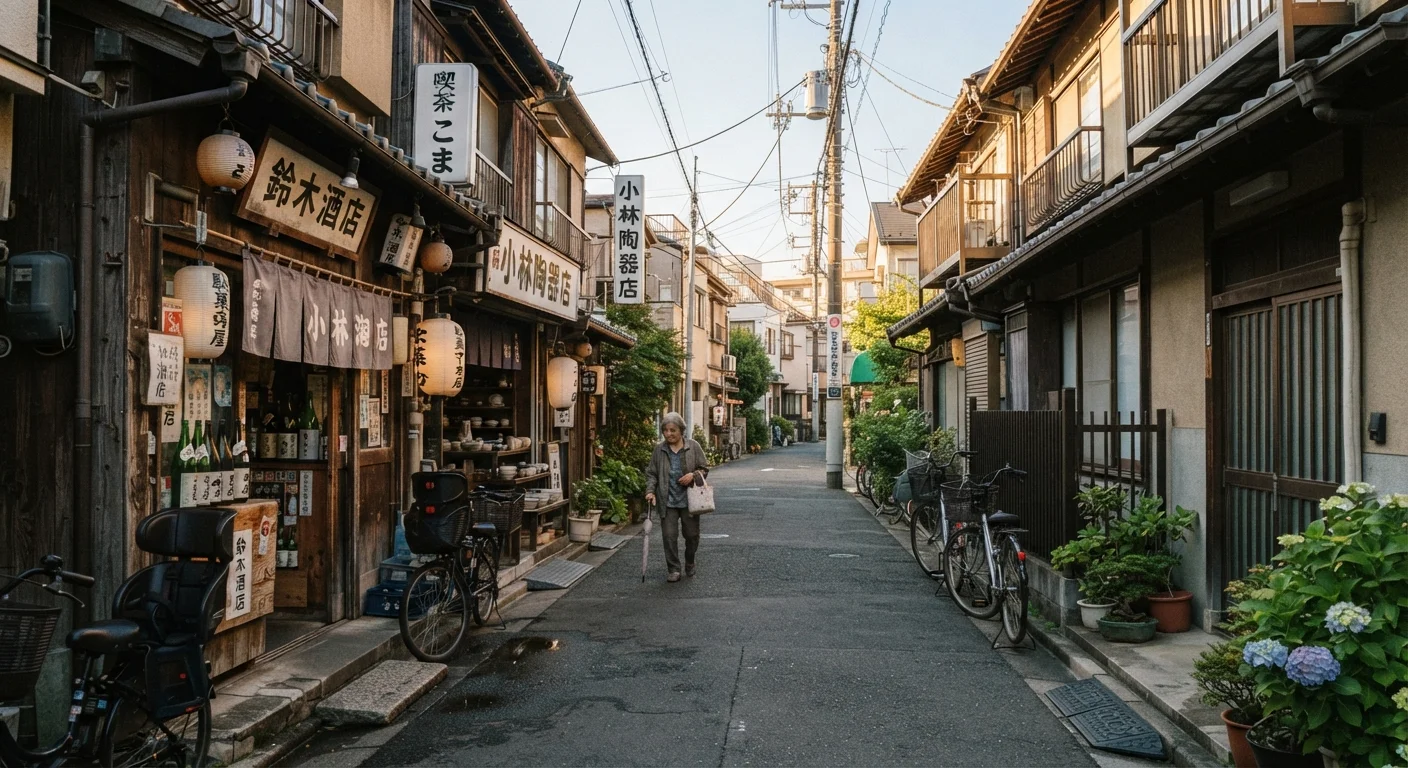
Yanaka escaped much of the WWII bombing and the postwar redevelopment that reshaped most of central Tokyo. The result is a neighbourhood with pre-war wooden shopfronts, a sprawling old cemetery that doubles as a quiet park, and a main shopping street (Yanaka Ginza) that still functions as a genuine local arcade rather than a tourist recreation of one.
What to expect: independent craft shops, small temples, tofu sellers, and sake bars that close when the owner feels like it. Prices are noticeably lower than Harajuku or Ginza. What to skip: there's no singular attraction here - if you need a checklist item, this district will frustrate you. It rewards slow walking.
Yanaka is the closest thing to pre-war Tokyo that a visitor can still walk through.
Shimokitazawa - Live Music, Vintage Clothing, and No Chain Stores
Shimokitazawa has functioned as Tokyo's bohemian counterweight since at least the 1980s. It's dense with live music venues (everything from jazz to indie rock), vintage clothing shops, small theatres, and independent coffee roasters. The street layout is intentionally maze-like - narrow, pedestrian-favoured, and largely free of the franchise restaurants that dominate elsewhere.
Budget note: vintage shops here vary widely in price. Some stock designer imports at steep markups; others are genuine second-hand finds. Live music cover charges at smaller venues typically run ¥1,500-¥3,000 with a drink included, which represents reasonable value for a full set. Plan to arrive in the late afternoon when the neighbourhood comes alive.
Shimokitazawa is one of the few Tokyo districts where chain stores are the exception, not the rule.
Koenji - Subcultures and Affordable Eating
Koenji sits west of Shinjuku on the Chuo Line and draws a younger, local crowd. It's known for punk and alternative music venues, more vintage shops, and a density of small izakayas (informal Japanese gastropubs) that serve unpretentious food at prices the surrounding residential population actually pays. Lunch sets here frequently run under ¥1,000.
The Koenji Awa-Odori festival each August is one of Tokyo's most attended summer events, though visiting outside that window means fewer crowds and more straightforward access to the neighbourhood's everyday character. The covered shopping arcade north of the station is worth a walk-through for a sense of how an unglamourised Tokyo shopping street operates day-to-day.
Koenji izakayas offer some of the most honest value eating in the city for solo travellers.
Nezu and Yanesen - The Quieter Side of Shitamachi
Nezu sits adjacent to Yanaka and shares its low-rise, pre-war character. The Nezu Shrine - a compact but genuinely beautiful example of a traditional Shinto shrine with a tunnel of torii gates - draws far fewer visitors than the famous Fushimi Inari in Kyoto while offering a comparable visual experience. Early morning visits (before 9am) are typically uncrowded.
Together, Yanaka, Nezu, and Sendagi form what locals call the Yanesen area - a walkable triangle that can fill a productive half-day without a single bullet-point attraction. The payoff is texture: small family restaurants that have occupied the same address for decades, cats in doorways, shrines you'd walk past if you weren't looking. It is genuinely unhurried.
Nezu Shrine at early morning offers a crowd-free alternative to better-known torii tunnel sites.
Kagurazaka - French Influence, Geisha History, and Excellent Food
Kagurazaka has an unusual dual identity: it was historically a geisha district and later became home to a sizable French expatriate community, giving it a character unlike anywhere else in Tokyo. The result is a neighbourhood where traditional Japanese ryotei (formal restaurants) operate alongside French bakeries and bistros, often within the same narrow alley.
The hidden lanes (横丁, yokocho) branching off the main street are where the real character lives - stone-paved alleys with potted plants leading to restaurants that seat twelve people. Kagurazaka is not a budget destination; the food skews upscale. But the neighbourhood is freely walkable, the architecture is distinctive, and the lunch hour crowds are manageable on weekdays.
Kagurazaka's hidden yokocho alleys contain some of Tokyo's most atmospheric small restaurants.
Nakameguro - Canal Walks and a More Local Pace
Nakameguro is well-known to Tokyo residents but still sees fewer international visitors than Harajuku or Roppongi. The Meguro River running through it is lined with coffee shops, bookstores, and restaurants that are destination businesses in their own right - not tourist infrastructure. The cherry blossom season along the canal is one of Tokyo's genuinely spectacular events, though navigating it requires planning for crowds.
Outside blossom season, Nakameguro is quieter and walkable at any pace. It's a practical choice for travellers who want independent shops and quality food without the full tourist-district overhead. Weekday mornings here feel like a neighbourhood rather than an experience - which, depending on what you're after, is precisely the point.
Nakameguro rewards visitors who arrive outside cherry blossom season with an unhurried, local atmosphere.
Getting Around Without Wasting Half Your Day
Every district listed here is reachable by train or subway using a standard IC card (Suica or Pasmo). None require special rail passes. Travel times between most pairs of these neighbourhoods run 20-40 minutes, which means combining two in a single day is practical as long as you're not trying to squeeze in three tourist landmarks on top.
Understanding Tokyo's layered transit network before departure saves real time on the ground - the distinction between Tokyo Metro, Toei Subway, and JR lines isn't immediately obvious, and using the wrong line can mean paying double. A loaded IC card sidesteps most of that friction automatically.
If your goal is depth over breadth, weighing a slower travel approach against a packed itinerary is worth doing before you finalise anything. Tokyo consistently rewards the traveller who stays in one place long enough to eat lunch, wander without a map, and double back.
Load Your IC Card Before You Explore
A Suica or Pasmo card loaded with ¥3,000-¥5,000 covers most day-trip transit costs across these neighbourhoods without requiring exact fare calculation at each gate. Cards are reloadable at any station kiosk and accepted on Tokyo Metro, Toei Subway, and JR lines. Picking one up at Narita or Haneda on arrival avoids the first-day friction of buying individual tickets.