What You're Actually Choosing Between
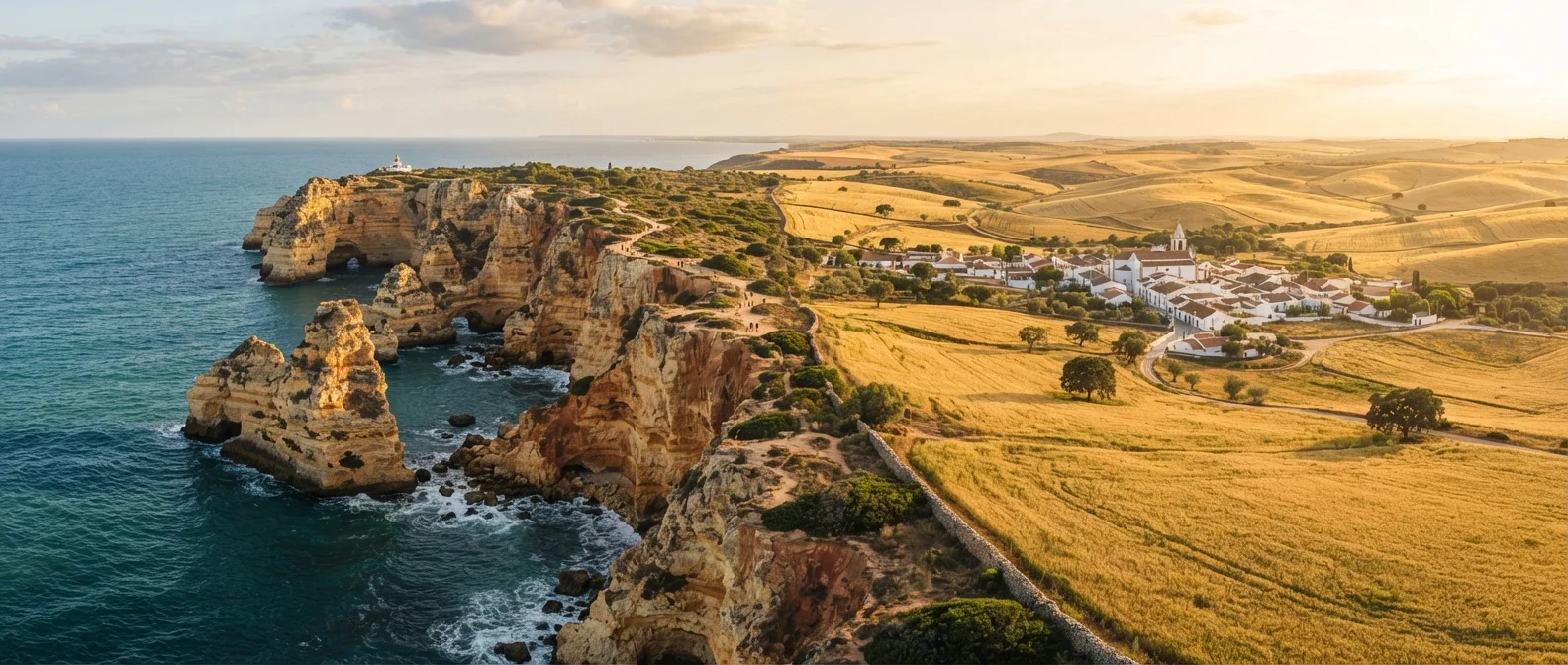
Portugal's coastal strip - from the Algarve's sea cliffs in the south through Lisbon, Sintra, and up to Porto - accounts for the vast majority of international tourist traffic. The interior, centered on the Alentejo plateau and extending into Trás-os-Montes in the north, is a different country in feel: sparse, slow, and largely unmarketed to foreign visitors.
This isn't a beach-versus-city comparison. It's a question of travel density versus travel depth. The coast packs sightseeing opportunities and infrastructure into a compact corridor; the interior asks you to slow down, cover more ground for fewer sights, and pay attention to what's actually around you. Understanding that trade-off upfront saves a lot of trip-planning frustration. If you're still working out your broader travel style, the guide on city breaks versus slow travel is worth reading before you finalize your itinerary.
Coastal Portugal: What It Delivers - and Where It Falls Short
The coast is Portugal's commercial tourism engine, and that shows in both its strengths and weaknesses. Logistically, it's easy: trains connect Lisbon to Porto in under three hours, buses reach most Algarve resort towns, and accommodation density is high enough that last-minute availability is rarely catastrophic outside peak July and August.
Culturally, the coastal corridor is layered. Lisbon's historic neighborhoods, Sintra's palace-studded hills, and Porto's riverside architecture are genuinely world-class. The Algarve's appeal is more straightforward: exceptional beaches with well-organized facilities, reliable weather from April through October, and day-trip infrastructure that makes moving around simple.
The downsides are predictable. Prices in Lisbon and coastal Algarve have risen substantially over the past decade. Accommodation in central Lisbon now regularly competes with Western European capitals on cost. Popular spots - Pena Palace, Cape St. Vincent, Lagos old town - draw crowds that can erode the experience in high season. Authentic local life can feel increasingly curated in the most touristed zones.
| Coastal Portugal | Alentejo Interior | |
|---|---|---|
| Getting around | Train, bus, and rideshare widely available | Car rental effectively required |
| Accommodation cost | Higher, especially Lisbon and Algarve peak season | Generally 20-40% lower than coastal equivalents |
| Crowd levels (summer) | High to very high at popular sites | Low; most towns see minimal tourist traffic |
| Cultural authenticity | Variable; heavily touristed zones feel curated | Strong; local life largely unaffected by tourism |
| Best travel season | April-October; winter viable in cities | March-May and September-October strongly preferred |
| Food and dining | Diverse, internationally influenced, pricier | Regional, traditional, generally affordable |
| Sightseeing density | High - many major sites in a compact area | Low - fewer sites, more spread out |
The Alentejo Interior: Lower Profile, Higher Reward
The Alentejo covers roughly a third of Portugal's land area and holds less than 5% of its population. That math produces an experience that's harder to find in Western Europe: empty roads, unhurried towns, and locals who are genuinely curious about why you're there.
Évora, the region's anchor city, is a UNESCO World Heritage site with Roman ruins integrated into an active, unpretentious town center - and it sees a fraction of the visitor volume that comparably significant sites elsewhere attract. Smaller towns like Monsaraz, Mértola, and Estremoz offer medieval architecture and local crafts without souvenir-shop saturation. The food - Alentejo bread, slow-cooked pork, regional wines from the Alentejo DOC - is widely considered among Portugal's most distinctive, and restaurant prices reflect local incomes rather than tourist markups.
The practical constraints are real. A rental car is essentially required; bus connections between interior towns are infrequent and slow. Summer temperatures in the Alentejo routinely exceed 100°F (38°C), making July and August genuinely uncomfortable for daytime sightseeing. Spring (March-May) and autumn (September-October) are far more suitable windows.
Time Your Alentejo Visit Carefully
Spring (March through May) is widely considered the interior's finest window: temperatures are mild, wildflowers cover the plains, and accommodation availability is good. Autumn (September-October) is a close second. Avoid planning primary interior sightseeing in July and August if you're sensitive to heat - daytime temperatures regularly exceed 100°F and shade in smaller towns is limited.
How to Structure a Trip Across Both
Most travelers have more to gain from combining the two than from choosing one. A workable structure for a 10-14 day Portugal trip: open with two to three days in Lisbon to orient, use a day trip to Sintra or Setúbal, then drive or take the train to Évora for two days, loop through one or two smaller Alentejo towns, and close the trip with three to four days in the Algarve if beach time is a priority.
This approach avoids the common mistake of spending an entire trip on the coastal corridor and leaving with a half-picture of the country. It also distributes accommodation spend usefully - Alentejo nights are typically less expensive, which can offset higher coastal-city costs.
One honest caveat: the interior doesn't suit every traveler. If your priorities are nightlife, dense museum programming, or beach access, Alentejo days may feel slow rather than restorative. Know your actual preferences before building the itinerary around what sounds culturally impressive.
Cost, Crowds, and Seasonal Timing
Broadly, interior Portugal runs 20-40% cheaper than comparable coastal stays on accommodation and dining, though this varies by specific location and season. Alentejo agritourism properties (known locally as herdades) can be an exception - some are positioned as premium rural retreats and priced accordingly.
Crowd levels diverge sharply in summer. The Algarve's peak season runs June through August; coastal Algarve towns like Albufeira and Lagos are genuinely packed during these months. Lisbon sees year-round pressure on its most iconic sites. The Alentejo, by contrast, is busiest in spring and autumn and nearly empty in winter - which makes it an underused option for travelers who have schedule flexibility.
~33%
Share of Portugal's land area covered by Alentejo
The Alentejo is Portugal's largest region by area, yet accounts for a small fraction of annual international tourist overnight stays.
Top 5
Alentejo's global wine region ranking
The Alentejo DOC is consistently recognized among Europe's notable wine-producing regions, with output that rivals far more famous appellations.
Shoulder seasons (April-May and September-October) offer the most balanced trade-off across both regions: manageable crowds, moderate prices, and weather that suits both sightseeing and beach time. Winter travel is viable on the coast - Lisbon and Porto are genuinely rewarding in cooler months - but interior winters are cold and many smaller rural businesses reduce hours or close entirely.