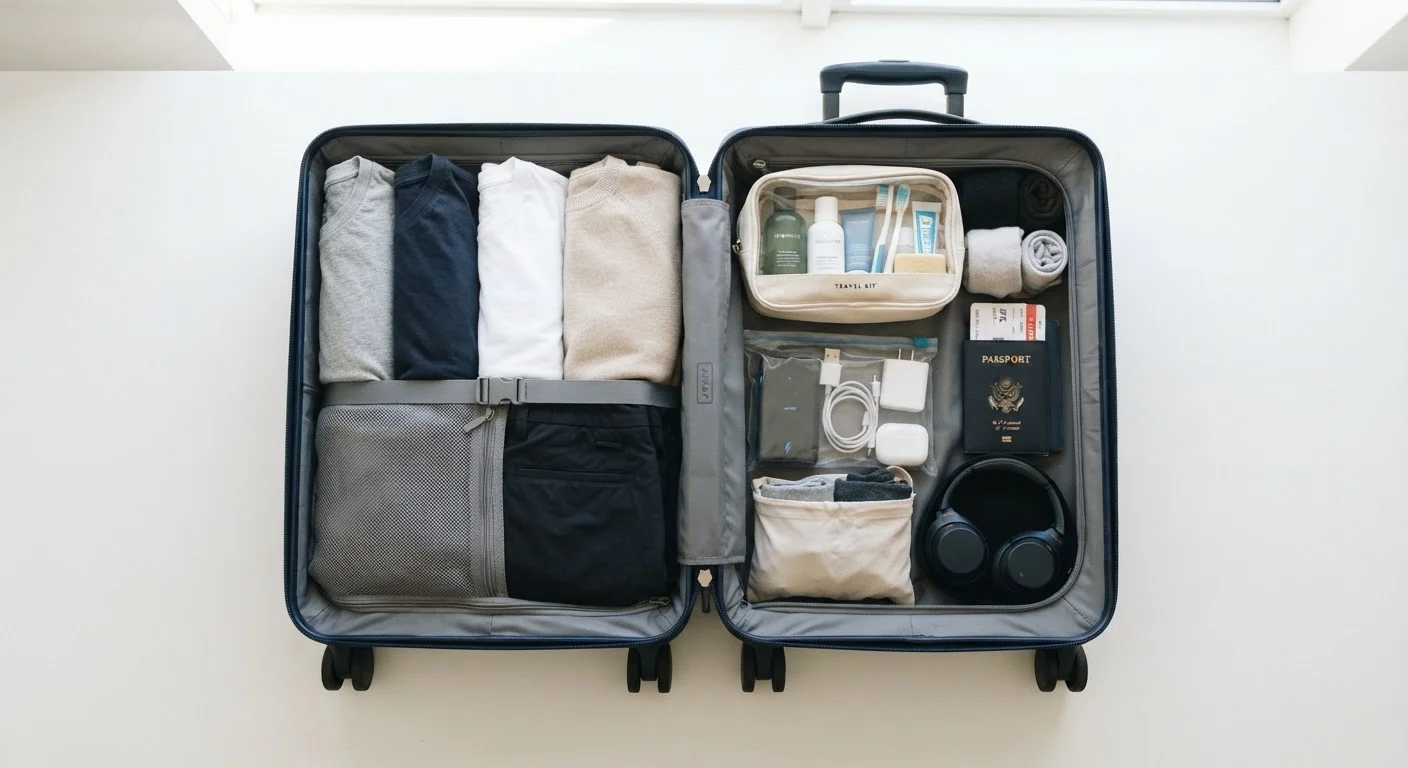
What Carry-On Only Actually Means
Traveling carry-on only means fitting everything you need into a bag that meets your airline's overhead bin size and weight restrictions - typically around 22 x 14 x 9 inches and 15-22 lbs, though limits vary by carrier and route. You may also bring one personal item, such as a small backpack or tote, which adds meaningful capacity if used strategically.
The approach has grown popular among frequent travelers as airlines have raised checked baggage fees and airports have become busier. Understanding the real trade-offs - not just the highlights - helps you decide whether it suits your next trip. If you're still building your overall travel framework, the practical starting point for budget travelers covers the broader picture worth reviewing first.
The Advantages
Avoids checked baggage fees on most carriers
Checked bag fees on domestic routes commonly run $35-$75 each way per bag. On a round trip, carry-on only can save $70-$150 or more per traveler.
Faster airport experience at both ends
No bag drop queue before departure and no baggage claim wait on arrival streamlines the airport process significantly, especially on connecting flights.
Eliminates risk of lost or delayed luggage
Checked bags are occasionally delayed or misdirected; traveling carry-on only means your belongings stay with you throughout the journey.
Greater mobility between destinations
A lighter bag is easier to manage on public transit, cobblestone streets, and stairs - a real advantage on multi-city trips without a fixed base.
Encourages intentional packing decisions
The strict space constraint forces travelers to think carefully about what they actually need, often resulting in a less cluttered trip overall.
The time savings alone are significant for many travelers. Bypassing the checked bag drop line before departure and skipping baggage claim on arrival can save 30-60 minutes per flight segment - meaningful on a multi-leg itinerary. For budget-conscious travelers, the fee savings compound quickly; many domestic and international carriers now charge $35-$75 per checked bag each way. See how this fits into a broader cost strategy in our guide to stretching a travel budget across an entire trip.
The Disadvantages
Strict size and weight limits restrict what you bring
Airlines enforce carry-on dimensions and weight caps, which vary by carrier. Bulky clothing, specialty footwear, or large toiletry bottles may simply not fit within the rules.
Liquids rule limits toiletry options
TSA's 3-1-1 rule caps liquids at 3.4 oz per container in a single quart-sized bag. Travelers with specific skincare, medical, or grooming needs may find this genuinely restrictive.
Challenging for trips longer than 10-14 days
Extended trips require either significant laundry planning or accepting outfit repetition - which is manageable for some travelers but a meaningful constraint for others.
Multi-climate itineraries are difficult to manage
Packing for both warm and cold destinations in one bag demands precise clothing choices and often means compromising on comfort at one end of the temperature range.
Overhead bin space isn't guaranteed
On full flights, gate agents may check carry-ons at the aircraft door - negating the time and cost advantages that motivated the approach in the first place.
Shopping during your trip becomes complicated
If you plan to purchase clothing, souvenirs, or other items, a carry-on that was packed to capacity at departure leaves little room for anything acquired en route.
The constraints become most apparent on longer trips or in variable climates. Bulky items - winter coats, hiking boots, formal wear - consume bag space quickly and are difficult to substitute. Travelers heading to colder destinations or mixing beach and mountain activities in one trip often find a single carry-on insufficient without very deliberate planning. Our zone-by-zone clothing framework can help you assess what's realistic for your destination combination.
International Routes May Have Stricter Rules
Carry-on size and weight allowances vary more widely on international and budget carriers than on major U.S. domestic routes. Some low-cost international airlines restrict carry-ons to as little as 15 lbs or charge fees for bags that exceed their personal item dimensions. Always verify the specific allowances for each airline on your itinerary before packing, particularly when booking through a third-party site where the operating carrier may differ from the ticketing carrier.
When Carry-On Only Makes the Most Sense
The approach works best when your trip has a consistent climate, you're moving between cities frequently (making a lighter bag a genuine physical advantage), and you have flexibility to do laundry mid-trip. Business travelers on short trips and city-hopping itineraries are natural fits.
It becomes more difficult when traveling with children, requiring medical equipment, attending a formal event, or visiting destinations where you'll buy items to bring home. In those cases, the mental energy spent packing optimally may not be worth it compared to simply checking a bag. Consider how your packing approach intersects with your overall itinerary by reviewing how to build an itinerary that actually works.
$70-$150+
Typical round-trip checked bag savings per traveler
Based on common domestic carrier fees of $35-$75 per checked bag each way, which vary by airline and fare class.
30-60 min
Estimated time saved per flight segment
Skipping bag drop and baggage claim on each flight leg can meaningfully reduce total airport time on multi-stop itineraries.
3.4 oz
TSA liquid container limit for carry-on bags
The TSA 3-1-1 rule applies to all carry-on liquids at U.S. airport security checkpoints; rules may differ on international routes.
Making an Honest Assessment Before You Pack
Before committing to carry-on only, run through a few honest questions: How many nights is the trip? Will temperatures vary significantly? Do you need any gear over 100ml in liquid form that can't be purchased at your destination? Are you comfortable rewearing or hand-washing items?
Frequent travelers tend to approach these decisions systematically rather than optimistically. The habits that make frequent travelers better at planning offers a useful lens here. Carry-on only isn't inherently superior to checking a bag - it's a tool that fits certain trips well and others poorly. Choosing it deliberately, rather than as a default, is what makes it genuinely useful.