Why Diagnosing First Saves You From Repeating the Problem
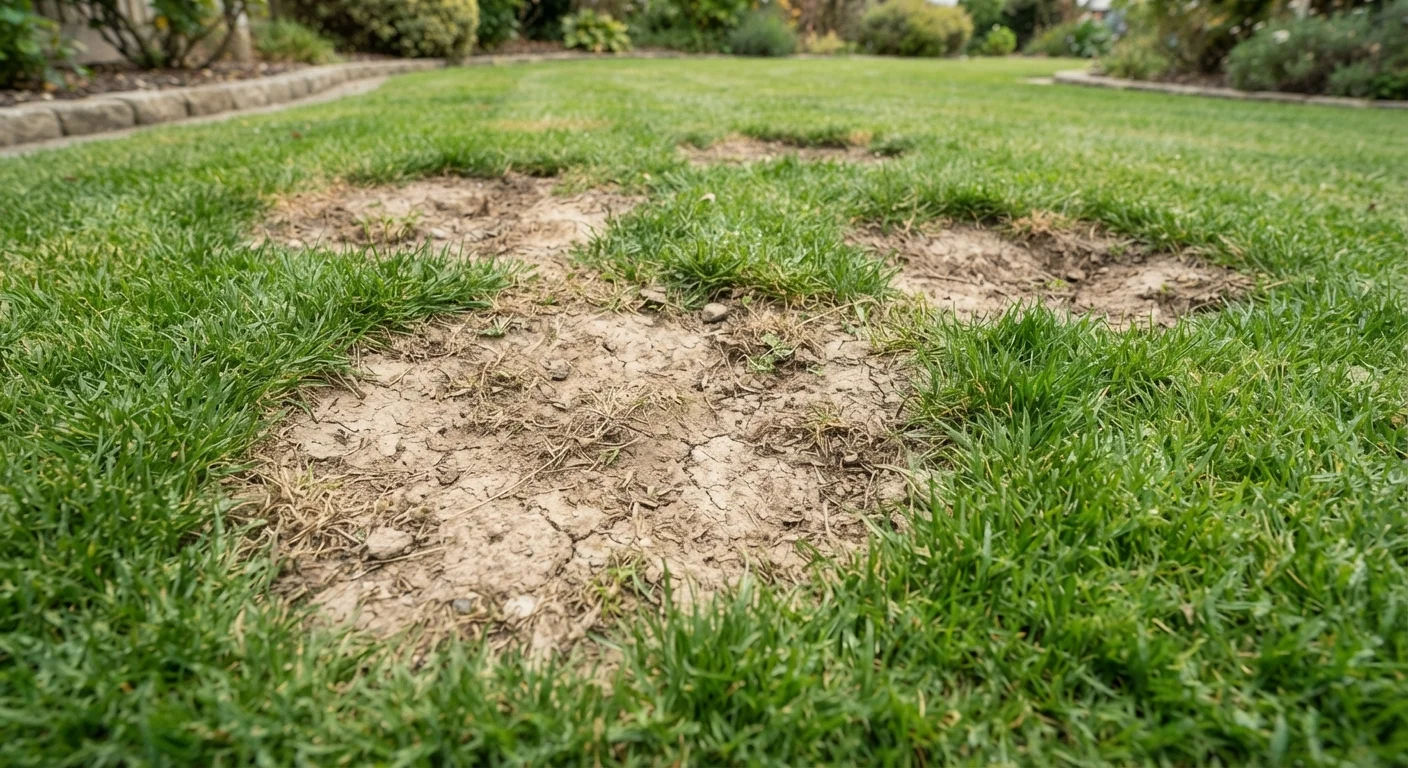
Bare patches are one of the most frustrating lawn problems precisely because they look identical on the surface regardless of what's causing them. Homeowners frequently grab a bag of grass seed at the first sign of trouble - only to watch the new growth die off in the same spot weeks later. That cycle happens because the underlying condition was never addressed.
Before any repair makes sense, you need to match the symptom pattern to a cause. Grub damage, for example, produces turf that peels up like a loose carpet because root systems have been destroyed. Compaction-related bare spots tend to appear in high-traffic corridors - along the path from a gate to a back door, for instance - and the soil feels almost concrete-hard underfoot. Shade-related dieback is gradual and follows the canopy outline of a nearby tree. Knowing these signatures stops you from defaulting to the same failed fix repeatedly.
Improving your underlying soil structure is often a simultaneous priority. See our guide to soil amendments for a breakdown of which products genuinely move the needle on soil health versus those that rarely help.
Common Mistakes Homeowners Make With Bare Patches
The errors below account for most repeat failures when trying to restore a lawn. Each one is common, understandable - and avoidable once you know what to look for.
Reseeding immediately without fixing the underlying cause.
Why it happens: Grass seed is the most visible solution, and the impulse to fill in bare spots quickly is understandable. Most homeowners don't realize that new seedlings will face the exact same hostile conditions as the grass that failed.
Applying the wrong type of grass seed for the site conditions.
Why it happens: Many homeowners buy whatever all-purpose seed is available without checking whether it suits their sun exposure, climate zone, or soil type. A sun-loving bluegrass blend planted under a dense tree canopy will thin out no matter how well it's watered.
Watering lightly and frequently after reseeding, then stopping too soon.
Why it happens: Light daily watering feels attentive, but it keeps moisture only in the top inch of soil. Germinating seed and new roots never develop the depth needed to survive dry spells, and homeowners often reduce watering once green appears - before the grass is actually established.
Ignoring soil compaction as a recurring cause.
Why it happens: Compaction is invisible - the lawn looks fine from a distance and most people associate bare patches with seed or watering problems. High-traffic areas along fence lines or play zones compress soil over multiple seasons without obvious warning signs.
Treating for grubs without confirming an active infestation.
Why it happens: Grub damage looks similar to drought stress or disease, and applying a grub control product feels proactive. Unnecessary treatments add chemical load to the lawn, can disrupt beneficial soil organisms, and cost money without solving the actual problem.
Assuming every bare patch is caused by the same thing.
Why it happens: Once a homeowner identifies one cause - say, dog urine - they tend to apply that explanation to every new bare spot that appears. Different areas of the same lawn can have completely different problems happening simultaneously.
Matching the Fix to the Actual Cause
~40%
Of US lawns affected by soil compaction
Soil scientists estimate that compaction is a contributing factor in roughly 40% of residential turf decline cases, particularly in high-traffic yards with clay-heavy soils.
6-8 weeks
Typical establishment time for reseeded patches
Most cool-season grass varieties require six to eight weeks from germination before new turf is durable enough to handle regular foot traffic, according to university extension turfgrass programs.
Once you've identified the cause, the repair strategy becomes straightforward. For compacted soil, core aeration - using a plug aerator that physically removes small cylinders of soil - opens up pore space so roots can re-establish. Follow aeration with a topdress of compost to rebuild organic matter. For shaded areas, either switch to a shade-tolerant grass variety suited to your region, or consider replacing turf with a groundcover better adapted to low light. Our low-maintenance landscaping guide covers groundcover alternatives that hold up without constant intervention.
Grub damage requires confirming an active infestation before treating - pull back a square foot of turf in the affected area and count larvae. Treatment thresholds and timing vary by grub species and region, so consult your local cooperative extension service for guidance specific to your area. For drought stress, deep and infrequent watering (generally one inch per week, delivered in one or two sessions rather than daily light sprinkles) trains roots to grow deeper. Dog urine spots respond well to thorough flushing with water immediately after the event and overseeding with a urine-tolerant fescue blend once the nitrogen burn dissipates.
In every case, reseeding is the final step - not the first. Prepare a firm seedbed, keep it consistently moist through germination, and hold off on foot traffic until the new grass reaches mowing height. A thin layer of straw or compost over freshly seeded areas helps retain moisture without smothering seedlings; for more on that approach, see our mulching basics article.