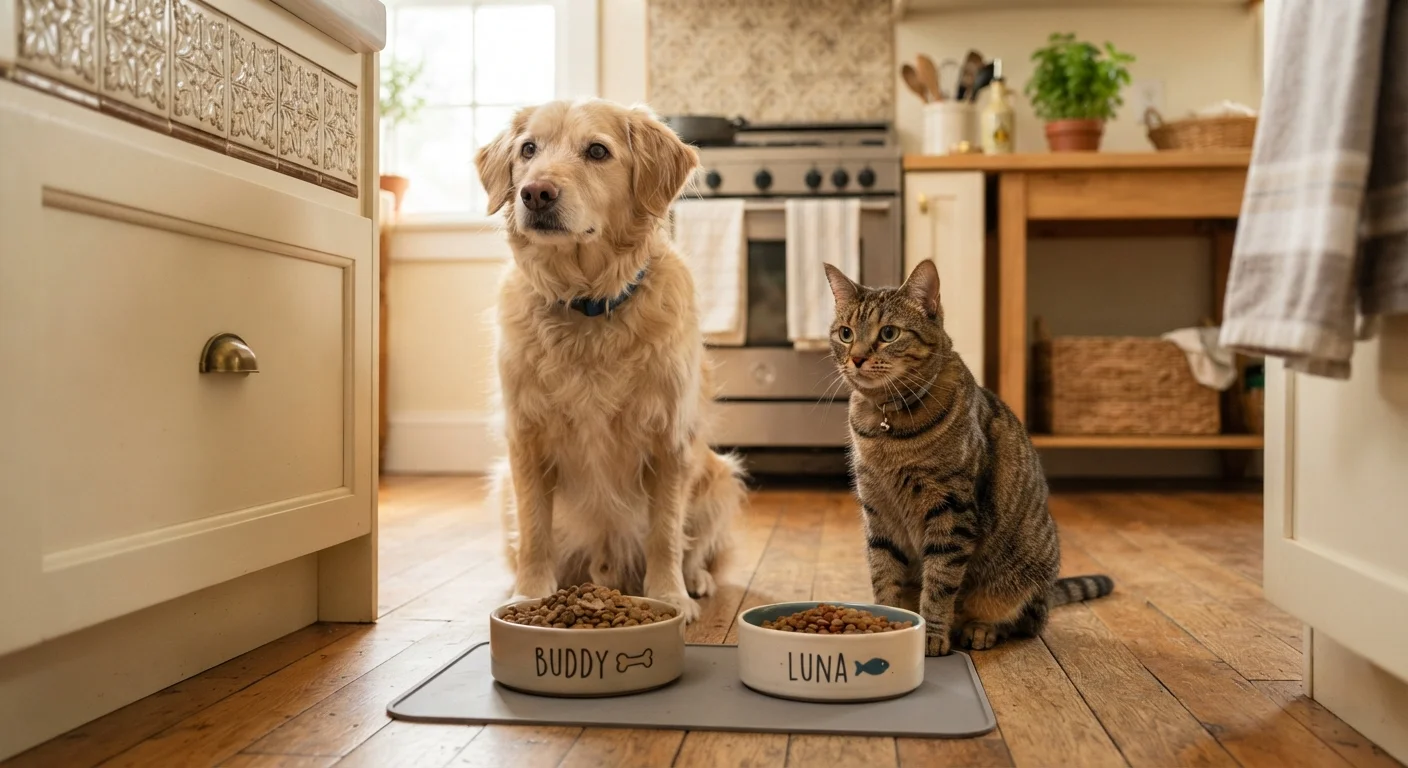
Why Dog and Cat Nutritional Needs Are Fundamentally Different
The core reason dogs and cats cannot simply share a food bowl comes down to biology. Dogs are omnivores - their digestive systems evolved to handle a broad range of proteins, fats, and carbohydrates, including plant-based sources. Cats, by contrast, are obligate carnivores, meaning their bodies are biologically dependent on nutrients found exclusively in animal tissue.
This distinction has profound implications for how commercial pet foods are formulated. For a deeper look at what makes feline nutrition so specialized, see our guide to feline nutritional needs.
Three nutrients illustrate the gap most clearly:
- Taurine: Cats cannot synthesize taurine from other amino acids, so they must obtain it directly from food. Dog food is not required to contain added taurine, because dogs produce their own. A cat consistently fed dog food risks taurine deficiency, which can cause dilated cardiomyopathy (a serious heart condition) and vision problems.
- Arachidonic acid: This essential fatty acid must come from animal fat in cats; dogs can convert linoleic acid from plant sources into what they need. Dog food often lacks sufficient arachidonic acid for cats.
- Preformed vitamin A: Cats cannot convert beta-carotene from plants into vitamin A. They require preformed vitamin A from animal liver or supplemented sources - something cat food provides but dog food may not in adequate amounts.
These are not minor nutritional gaps. Sustained deficiencies in any of these nutrients can produce serious, sometimes irreversible, health consequences in cats.
| Criterion | Dog Food | Cat Food |
|---|---|---|
| Protein level | Moderate (18-26% typical) | High (30-45% typical) |
| Fat content | Lower to moderate | Higher (energy-dense) |
| Taurine added | Not required; dogs self-synthesize | Required; added to all formulas |
| Arachidonic acid | Not required in diet | Must be present from animal fat |
| Preformed Vitamin A | May rely on beta-carotene conversion | Must be supplied preformed |
| Carbohydrate tolerance | Higher; digests plant starches well | Lower; limited amylase activity |
| Caloric density | Generally lower | Generally higher |
| Safe for the other species? | No - deficient for cats long-term | No - too rich for dogs regularly |
What Happens When Pets Eat Each Other's Food
Understanding the consequences in each direction helps put the risk in context.
Dogs Eating Cat Food
Cat food is considerably richer than dog food - higher in both protein and fat, formulated to meet a carnivore's caloric density requirements. For a dog, this creates a few specific concerns:
- Gastrointestinal upset: Many dogs experience vomiting or diarrhea after eating cat food, simply because the fat content is too high for their digestive systems.
- Weight gain and obesity: Regular consumption of the calorie-dense cat food formula can lead to gradual weight gain in dogs.
- Pancreatitis: High-fat diets are a known risk factor for pancreatitis in dogs, a painful and potentially serious inflammatory condition of the pancreas.
Cats Eating Dog Food
The risks for cats are even more direct. Because dog food is not formulated to supply taurine, arachidonic acid, or preformed vitamin A at feline-appropriate levels, a cat subsisting primarily on dog food faces genuine nutritional deficiency. Heart disease, vision impairment, and poor coat and skin health are among the documented consequences.
It is worth noting that an isolated, accidental bite of the other species' food is unlikely to cause acute harm in an otherwise healthy adult pet. The concern is with regular or sustained cross-feeding.
Watch for Household Food Hazards Too
Beyond cross-species food sharing, both dogs and cats can be harmed by common human foods left accessible in the kitchen. Our reference guide to harmful household foods covers which everyday ingredients pose the greatest risk and why.
If you are navigating any kind of dietary transition, our guide to switching pet food safely covers how to make gradual changes that minimize digestive stress.
Practical Tips for Multi-Pet Households
Households with both dogs and cats often find mealtime management to be a genuine logistical challenge. Here are evidence-informed strategies that can help:
- Feed in separate rooms with doors closed. This is the most reliable way to prevent food-swapping entirely.
- Use elevated feeding stations for cats. Most dogs cannot easily access a cat food bowl placed on a counter or shelf, while cats can jump up without difficulty.
- Supervise mealtimes and remove bowls once each pet has finished, rather than leaving food available throughout the day. Free-feeding increases the opportunity for cross-access.
- Microchip-activated feeders are a technology-forward option - these bowls only open for the specific pet whose microchip is registered, effectively eliminating food-sharing even in shared spaces.
Budgeting for two separate food types may feel like an extra expense, but it is considerably less costly than treating diet-related illness. For related context, our overview of homemade pet food balance explores the risks and considerations if you are thinking about cooking for either pet.
If you are unsure whether your pet's current diet is meeting their needs - or if you have noticed symptoms like weight changes, dull coat, or digestive irregularities - consult a licensed veterinarian. They can assess your pet's individual health status and recommend the most appropriate feeding approach.
This article provides general educational information about pet nutrition and is not a substitute for personalized veterinary advice. Always consult a qualified veterinarian for guidance specific to your pet's health needs.