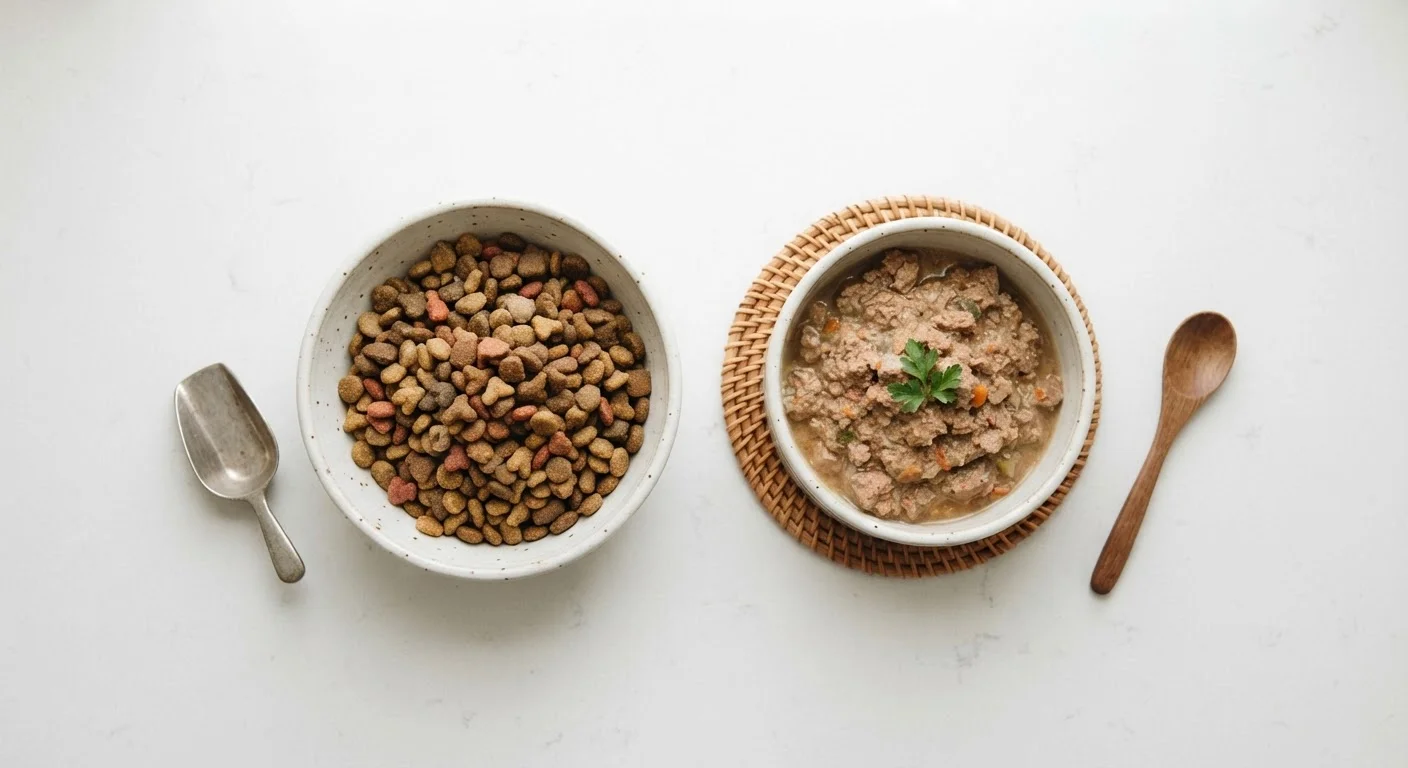
The Moisture Gap: Why Water Content Changes Everything
The single most significant nutritional difference between dry kibble and wet food is moisture. Wet food typically contains between 70% and 80% water by weight, while dry kibble sits at roughly 8% to 12%. This gap isn't just about texture - it fundamentally changes how you compare the two formats nutritionally.
Because wet food is so water-heavy, a 3-ounce serving delivers far fewer calories and less protein by weight than the same amount of kibble. To make a fair comparison, nutritionists use dry-matter basis (DMB) - a calculation that strips out moisture to reveal the actual nutrient content. On a dry-matter basis, many wet foods are competitive with or even superior to kibble in protein and fat density. Reading the guaranteed analysis panel on the label is essential; the raw percentages listed are always on an as-fed basis and can be misleading without this context. See our guide to common pet food label confusion for help decoding what those numbers actually mean.
For pets who are reluctant drinkers - or those managing kidney disease, urinary crystals, or chronic dehydration - the moisture in wet food can provide a clinically meaningful hydration boost that water alone may not reliably deliver.
70-80%
Moisture in typical wet pet food
Compared to 8-12% in dry kibble, according to general nutritional analysis standards used in pet food formulation.
~3x
More water per serving vs. kibble
A typical wet food serving delivers roughly three times more water by weight than an equivalent caloric serving of dry kibble.
AAFCO
Nutritional adequacy standard to look for
The Association of American Feed Control Officials sets the nutritional profiles that complete and balanced pet foods in the US must meet.
Protein, Digestibility, and Caloric Density
Kibble is manufactured through a process called extrusion, in which ingredients are cooked under high heat and pressure and then dried. This process extends shelf life significantly, but it can reduce the bioavailability of some heat-sensitive nutrients and alter protein structure. Wet food is typically processed at lower temperatures and retains more of its original ingredient profile as a result.
In practical terms, wet food often scores slightly higher on digestibility measures - meaning a larger proportion of the nutrients eaten are actually absorbed. For most healthy adult pets this difference may be modest, but it can matter more for seniors, animals with gastrointestinal sensitivities, or pets recovering from illness.
Caloric density works in the opposite direction. Because kibble has so little moisture, it packs more calories per ounce. This makes portion control especially important - even small overestimates can contribute to weight gain over time. Wet food's higher water content naturally creates a greater sense of volume and satiety per calorie, which can be an advantage for pets prone to overeating.
Understanding how these factors shift across life stages is equally important. What dogs actually need from their diet at every life stage outlines how protein and energy requirements change from puppyhood through senior years - and how food format fits into that picture.
Comparing Labels Fairly: Use Dry-Matter Basis
When comparing a wet food to a kibble on the guaranteed analysis panel, the raw protein percentage on a wet food label will almost always look lower - because most of that weight is water. To compare accurately, divide each nutrient percentage by the food's dry-matter percentage (100 minus moisture %). This gives you a true apples-to-apples view. Most veterinary nutritionists recommend this approach when evaluating any two food formats side by side.
Cost, Convenience, and Practical Feeding Decisions
On a per-calorie basis, dry kibble is almost always less expensive than wet food. A pet fed exclusively on wet food will typically require a significantly larger volume - and spend - to meet daily caloric needs. For multi-pet households or owners managing tight budgets, this cost differential is real and worth factoring in.
That said, cost-per-calorie is only part of the equation. If a pet's health condition makes wet food the nutritionally appropriate choice, the long-term costs of managing that condition may well outweigh any food savings. Our companion piece on stretching your pet food budget without cutting nutritional corners offers practical strategies for feeding well without overspending.
Many owners find that a mixed feeding approach - using kibble as the dietary base and adding a smaller portion of wet food - balances palatability, hydration, and cost reasonably well. If you're considering switching food types or introducing a new format, work through the key questions in our nutritional readiness checklist before making changes that could affect your pet's digestive stability.
| Criterion | Dry Kibble | Wet Food |
|---|---|---|
| Moisture content | 8-12% | 70-80% |
| Calories per ounce | Higher | Lower |
| Digestibility | Moderate | Generally higher |
| Shelf life (unopened) | 12-18 months | 2-5 years (canned) |
| Cost per calorie | Lower | Higher |
| Palatability for picky eaters | Variable | Generally higher |
| Dental abrasion benefit | Mild mechanical action | Minimal |
| Portion control ease | Easy to measure by weight | Easier to eyeball volume |
This article is for general informational purposes only and is not a substitute for personalized veterinary advice. Always consult a qualified veterinarian before making significant changes to your pet's diet, especially if your pet has an existing health condition.