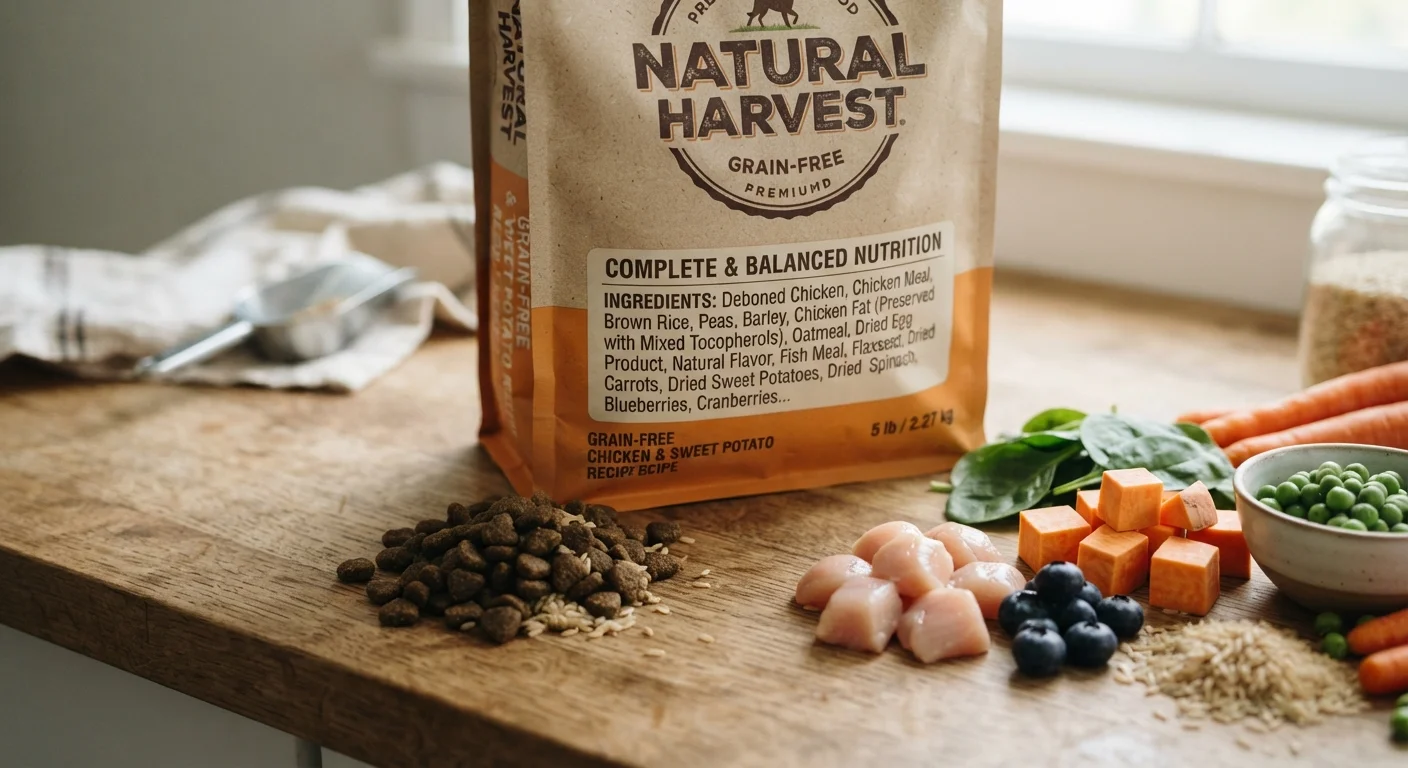
Why Pet Food Labels Confuse So Many Owners
Pet food packaging is designed to appeal to owners, not just to meet the nutritional needs of animals. Marketing language, unfamiliar ingredient names, and inconsistently regulated terms combine to create genuine confusion - even for attentive shoppers. The result is that many owners pay more for terms that sound reassuring but have little scientific or regulatory basis, while avoiding ingredients that are actually nutritious and well-studied.
Understanding what specific words actually mean - and which ones mean almost nothing - is one of the most practical steps owners can take. For a broader look at how labels are structured, see our guide on reading a pet food label without getting lost.
Myth
"By-products" are low-quality filler ingredients made from waste.
Fact
By-products are organ meats, blood, and other non-muscle-meat animal parts - many of which are nutrient-dense and regulated by AAFCO.
AAFCO defines poultry by-products as clean parts of slaughtered poultry such as heads, feet, and viscera, excluding feathers. These parts are commonly consumed in many human food cultures globally and can be rich sources of protein, fat, and micronutrients. "Slaughterhouse waste" is not an accurate description under AAFCO standards. The key quality variable is the sourcing and handling of the by-products, not the category itself.
Myth
"Chicken meal" is lower quality than "chicken" as a first ingredient.
Fact
Chicken meal is simply chicken with moisture removed - it is actually more protein-concentrated by weight than whole chicken listed as a fresh ingredient.
Ingredients are listed by weight before processing. Fresh chicken is roughly 70-80% water, so its pre-cooking weight is high - but that water cooks off. Chicken meal has already had moisture removed, meaning it represents a more concentrated protein source pound-for-pound. A food listing "chicken meal" high on its ingredient list may deliver more actual protein than one listing "chicken" first, depending on the rest of the formula.
Myth
"Natural" on a pet food label means the food is minimally processed or free from additives.
Fact
AAFCO's definition of "natural" is technical and limited; it does not prohibit processing or guarantee the absence of all additives.
Under AAFCO guidelines, "natural" means a feed or ingredient derived solely from plant, animal, or mined sources - not chemically synthesized - though synthetic vitamins and minerals added to meet nutritional requirements may still be included with a qualifier. The term does not address processing level, pesticide residues in ingredient sourcing, or overall nutritional quality. It is a narrow chemical-origin designation, not a broad quality certification.
Myth
Grain-free pet food is low in carbohydrates and therefore closer to a pet's ancestral diet.
Fact
Grain-free foods frequently replace grains with other high-carbohydrate ingredients such as potatoes, peas, lentils, or tapioca - total carbohydrate content may be similar or higher.
Grains are removed from grain-free formulas, but carbohydrates are not. Starches are needed in dry kibble production to bind the product, so alternative carbohydrate sources are routinely substituted. Additionally, the U.S. FDA has been investigating a potential association between certain grain-free diets high in legumes and dilated cardiomyopathy (DCM) in dogs, though research remains ongoing and causation has not been established. Owners considering grain-free diets should discuss the decision with their veterinarian.
Myth
"Holistic" pet food is held to a higher nutritional standard than conventional pet food.
Fact
"Holistic" has no regulatory definition in U.S. pet food labeling - any brand can use it without meeting any specific standard.
Unlike "organic," which has USDA certification requirements, "holistic" is an unregulated marketing term in pet food. AAFCO does not define it, and there is no third-party certification body that verifies what it means on a label. A food marketed as holistic is held to exactly the same AAFCO nutritional standards as any other food - no more, no less. Owners should focus on the nutritional adequacy statement and ingredient transparency rather than this term.
Terms That Sound Scary But Aren't
Several ingredients that regularly trigger concern among owners are, in practice, well-understood and regulated by the Association of American Feed Control Officials (AAFCO). "By-products" and "meal" are the two most commonly misread. The myths around them are widespread enough to drive purchasing decisions - and often toward pricier foods that may not offer any meaningful nutritional advantage.
~$150B
U.S. pet industry annual revenue
According to the American Pet Products Association, the U.S. pet industry has grown to generate roughly $150 billion in annual revenue, with food and treats representing the largest segment.
70-80%
Water content in fresh chicken as listed
Fresh chicken listed as a first ingredient on a pet food label is composed of roughly 70-80% water before processing, which substantially affects its effective protein contribution after cooking.
If budget is a factor in your food choices - and for most households it is - understanding where ingredient quality genuinely matters versus where labeling is simply marketing can help. Our article on stretching your pet food budget without cutting nutritional corners covers this in practical detail.
Marketing Words With No Regulatory Teeth
Not all confusing label language involves ingredient names. Some of the most prominent words on pet food packaging - "natural," "holistic," "premium," and "human-grade" - either carry limited regulatory definitions or none at all in the United States. AAFCO defines "natural" in a narrow technical sense (no chemically synthesized ingredients, with some exceptions), but the term is frequently applied in ways that imply a broader healthfulness that regulations don't actually require. "Holistic" has no AAFCO definition whatsoever.
"Premium" and "Holistic" Are Unregulated Claims
Neither "premium" nor "holistic" has a legal definition in U.S. pet food regulation. A manufacturer can print either word on any product regardless of ingredient quality or nutritional profile. Paying more for a food based solely on these terms is not a reliable path to better nutrition for your pet. Verify quality through the AAFCO adequacy statement and, where needed, a veterinarian's guidance.
This doesn't mean foods using these terms are bad - it means those words alone aren't evidence of quality. Look instead at the guaranteed analysis panel, the AAFCO nutritional adequacy statement, and whether the food is formulated for your pet's life stage. The full breakdown of what pet food labels actually mean explains each panel in detail.
For owners curious how similar labeling ambiguity appears in human food marketing, the concept maps closely to what's discussed in what "eating clean" actually means.
Making Decisions That Actually Benefit Your Pet
The most reliable indicator of a nutritionally complete pet food is the AAFCO nutritional adequacy statement - a line confirming the food meets established nutrient profiles for a specific life stage. Ingredient lists tell you what's present but not in what amounts (beyond rough order by pre-cooking weight), and they say nothing about digestibility or bioavailability.
If your pet has a specific health condition, unusual dietary sensitivity, or you're considering a home-cooked diet, the right resource is a board-certified veterinary nutritionist - not a label claim. Our piece on homemade pet food and getting the balance right outlines why professional guidance matters when stepping outside commercial foods. Similarly, the ongoing research around grain-free diets warrants careful reading - see the real story behind grain-free pet diets for a balanced overview.
This article is for general informational purposes only and does not constitute veterinary or nutritional advice. Consult a licensed veterinarian or board-certified veterinary nutritionist for guidance specific to your pet's health and dietary needs.