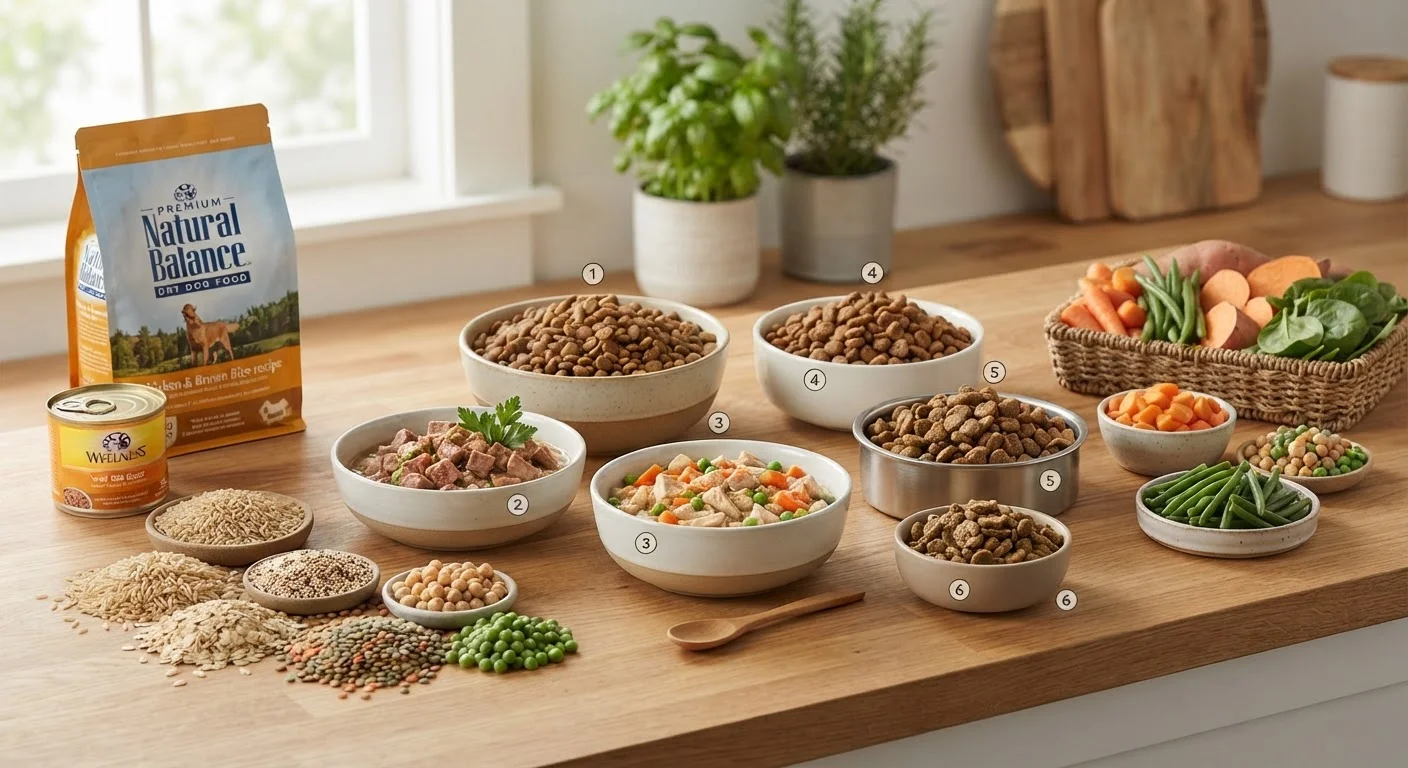
Why Grain-Free Became So Popular
Grain-free pet food exploded in popularity during the 2010s, driven largely by the parallel rise of grain-free and low-carb diets among humans. The reasoning seemed intuitive: if grains aren't ideal for people, why feed them to dogs and cats? Marketing leaned into ideas about ancestral, "species-appropriate" eating, and many owners made the switch believing they were giving their pets something purer or more natural.
The reality is more complicated. Understanding what grain-free actually means - and what it doesn't - is essential before making a food decision for your pet. For a broader look at how pet food labels are constructed and what terms are legally defined, see our guide on reading a pet food label.
Myth
Dogs and cats can't digest grains, so grain-free food is always healthier.
Fact
Dogs and cats can digest properly cooked grains reasonably well, and grains can contribute fiber, energy, and nutrients to a balanced diet.
Dogs have evolved alongside humans for thousands of years and have developed additional copies of the amylase gene compared to wolves, which helps them break down starch. While cats are obligate carnivores with a lower carbohydrate requirement, they can still process moderate amounts of cooked grains. Neither species is physiologically harmed by whole grains in a balanced formula. Digestibility depends more on how ingredients are processed than on whether grains are present at all.
Myth
Grain-free foods are the best option for pets with food allergies.
Fact
The most common food allergens for dogs and cats are animal proteins - such as beef, chicken, and dairy - not grains.
Studies on food allergies in pets consistently show that proteins are the primary culprits. Wheat accounts for a small minority of confirmed reactions. Switching to grain-free food will not address an allergy caused by a protein source that remains in the formula. Properly identifying a food allergy requires a hydrolyzed or novel-protein elimination diet under veterinary supervision - not simply removing grains from the ingredient list.
Myth
Grain-free means low-carb, which is better for pets.
Fact
Many grain-free formulas replace grains with starchy legumes or potatoes, resulting in similar or even higher carbohydrate levels.
When grains are removed, manufacturers need to replace both their binding function and caloric contribution. Peas, lentils, chickpeas, sweet potatoes, and tapioca are common substitutes - all of which are significant carbohydrate sources. A "grain-free" label does not indicate that a food is low in carbohydrates or starch. Owners seeking to genuinely reduce carbohydrate intake should review the guaranteed analysis panel and ingredient list carefully. Our guide to what pet food labels actually mean explains how to read those panels accurately.
Myth
Grain-free diets mimic what dogs and cats would eat in the wild.
Fact
Domestic pets have nutritional needs and digestive adaptations that differ meaningfully from their wild ancestors.
The "ancestral diet" argument assumes wild canids and felids represent an optimal nutritional model for domestic pets. In practice, wild animals eat opportunistically, have shorter lifespans, and are not optimized for the longevity goals we have for companion animals. Nutritional science for pets focuses on meeting established requirements for key nutrients across a life stage - not on replicating what a wolf or wildcat might eat. A food's ingredient list tells you less about quality than whether it meets the AAFCO (Association of American Feed Control Officials) nutritional adequacy standards for your pet's life stage.
Myth
If my pet is doing well on grain-free food, there's no reason to reconsider.
Fact
Outward appearance of good health doesn't rule out subclinical issues, and ongoing research means the risk picture may continue to evolve.
Dilated cardiomyopathy can develop gradually and may not produce obvious symptoms in early stages. Dogs on grain-free diets - particularly large and giant breeds already predisposed to cardiac issues - may benefit from periodic cardiac screening, depending on their veterinarian's recommendation. Staying current with the FDA's public updates and maintaining an open dialogue with your vet is the most practical approach, rather than either dismissing the concern or assuming the worst.
The FDA Investigation and Cardiac Concerns
In 2018, the U.S. Food and Drug Administration (FDA) began investigating a potential association between grain-free diets and dilated cardiomyopathy (DCM), a serious heart condition, in dogs. The agency noted that many affected dogs were eating foods high in legumes - such as peas, lentils, and chickpeas - which are commonly used as grain substitutes in grain-free formulas.
FDA Investigation: What Owners Should Know
The FDA has publicly flagged a possible association between grain-free diets rich in legumes and DCM in dogs. The investigation is ongoing, and no final conclusion has been reached. If your dog is a large or giant breed, or belongs to a breed with known cardiac predisposition (such as Doberman Pinschers, Great Danes, or Boxers), discuss the current evidence with your veterinarian before continuing or starting a grain-free diet.
As of the FDA's published updates, the investigation remains ongoing and a definitive causal link has not been established. Researchers have proposed several mechanisms, including reduced taurine bioavailability related to certain ingredients, but the science is still developing. This uncertainty is exactly why a conversation with your veterinarian matters before making a diet change - particularly for larger or predisposed breeds.
~90%
Food allergies caused by proteins, not grains
Veterinary dermatology research consistently identifies animal proteins as the dominant allergen in confirmed pet food allergy cases, with grains representing a small minority.
500+
DCM cases reported to the FDA
The FDA received over 500 reports of DCM in dogs potentially linked to diet between 2014 and 2019, with the majority eating grain-free formulas high in legumes.
If you're also weighing more unconventional feeding approaches, raw feeding for dogs covers a similarly nuanced set of trade-offs worth reviewing.
Making a Smart, Budget-Conscious Choice
Grain-free foods frequently carry a premium price tag - sometimes significantly more than comparable grain-inclusive formulas. Given that the nutritional evidence does not support a universal benefit for most pets, that price difference rarely reflects a health advantage. Before paying more, it's worth asking what problem you're actually trying to solve.
If your pet has a confirmed food sensitivity, work with your vet to identify the specific trigger through an elimination trial. Most diagnosed food allergies in dogs and cats involve animal proteins, not grains. If cost is a concern, our article on stretching your pet food budget offers evidence-grounded strategies for feeding well without overspending.
When evaluating any formula, look past marketing language. Terms like "holistic," "ancestral," or "natural" have little regulatory definition. For a plain-language breakdown of what those terms actually mean on a label, see our piece on pet food ingredients owners frequently misunderstand.
This article is for general informational purposes only and is not a substitute for personalized veterinary advice. Always consult a licensed veterinarian before making significant changes to your pet's diet, especially if your pet has an existing health condition.