What Raw Feeding Actually Involves
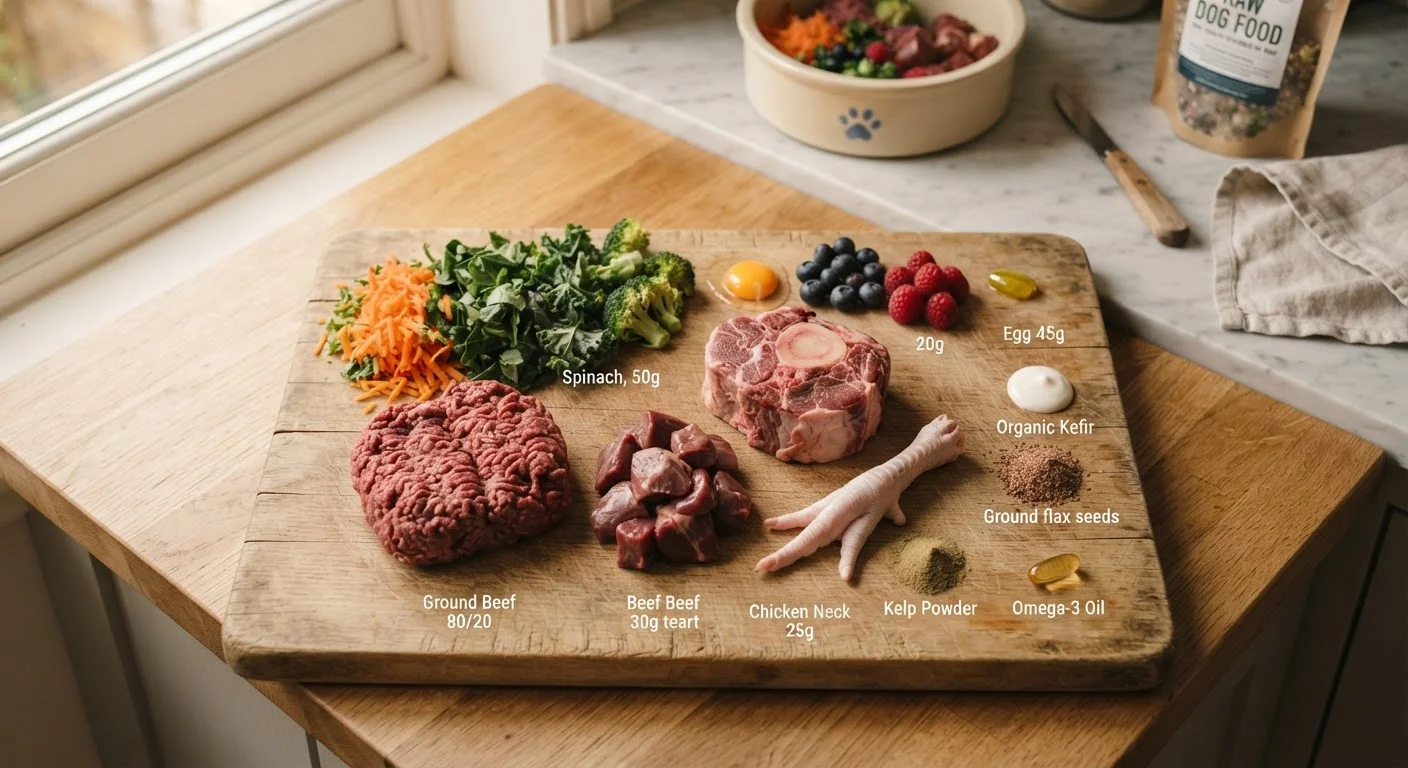
Raw feeding - often called a BARF diet (Biologically Appropriate Raw Food) or prey-model diet - centers on giving dogs uncooked meat, raw meaty bones, organ meat, and sometimes raw vegetables or eggs. Proponents argue this more closely mirrors the diet of wild canids. In practice, owners either purchase commercially prepared raw formulas (fresh or freeze-dried) or assemble meals themselves from grocery or butcher sources.
Home-prepared raw diets involve sourcing and balancing multiple ingredients to meet a dog's complete nutritional needs. This is harder than it sounds: simply feeding muscle meat and bones, without careful attention to micronutrient ratios, typically produces a diet deficient in key vitamins and minerals. Commercially prepared raw products vary widely in quality and formulation. For a broader look at how pet food labels can mislead, see our guide to commonly misunderstood pet food ingredients.
Claimed Benefits: What Supporters Say
Advocates of raw feeding report a range of improvements in their dogs, including shinier coats, smaller stools, better dental health, and higher energy levels. Some also believe raw diets reduce allergy symptoms or digestive issues linked to heavily processed food.
Minimal processing preserves natural enzymes and nutrients
Raw meat retains moisture, naturally occurring enzymes, and heat-sensitive nutrients that cooking can degrade. Some veterinary nutritionists acknowledge this as a theoretical advantage, though its practical significance in dogs is debated.
May support dogs with specific protein sensitivities
Dogs with food sensitivities tied to heavily processed ingredients sometimes tolerate single-ingredient raw proteins better. This benefit is individual and should be evaluated with veterinary guidance, not assumed.
Raw meaty bones may support dental hygiene
Chewing on appropriately sized raw bones can mechanically reduce plaque buildup. The Veterinary Oral Health Council notes chewing as beneficial, though bone feeding also carries injury and choking risks.
Ingredient transparency for cautious owners
Owners who prepare raw meals from scratch know exactly what goes into each serving, which appeals to those concerned about the opacity of commercial pet food manufacturing.
These observations are largely anecdotal. As of this writing, peer-reviewed clinical evidence supporting raw diets as superior to complete commercial diets is limited. Some studies suggest certain dogs with specific sensitivities may respond well to minimally processed protein sources, but that finding does not extend to all dogs or all raw-feeding approaches. The absence of strong evidence does not disprove individual owners' experiences - it simply means the science has not confirmed them broadly.
Documented Risks Owners Must Weigh
The concerns associated with raw feeding are better documented than the claimed benefits, and they span food safety, nutrition, and household health.
High risk of bacterial contamination
Raw meat commonly harbors Salmonella, Listeria, Campylobacter, and E. coli. Dogs can shed these pathogens in feces without showing illness, creating infection risks for household members - particularly vulnerable individuals.
Nutritional imbalance is common in home-prepared diets
Most home-assembled raw diets are deficient in calcium, phosphorus, zinc, or key vitamins unless carefully formulated. Chronic deficiencies cause progressive, sometimes irreversible health problems.
Bone feeding carries serious physical injury risks
Recreational bones can cause broken teeth, oral lacerations, esophageal obstruction, or intestinal perforation. These injuries often require emergency veterinary care.
Significantly higher cost than commercial dry food
A complete raw diet for a medium or large dog typically costs considerably more per month than premium dry kibble, making long-term affordability a genuine concern for many households.
Requires strict food-handling and hygiene protocols
Safe raw feeding demands refrigerator/freezer management, dedicated preparation surfaces, thorough sanitization after each meal, and careful waste handling - all of which add time and complexity.
Not suitable for all dogs or households
Dogs with compromised immunity, puppies, seniors with certain conditions, and dogs living with immunocompromised people are generally considered poor candidates for raw feeding by veterinary organizations.
The U.S. Food and Drug Administration (FDA) and the American Veterinary Medical Association (AVMA) both advise against raw meat-based diets for pets, citing the risk of pathogen shedding even in dogs that appear healthy. This is particularly relevant in households with young children, elderly individuals, pregnant people, or anyone immunocompromised.
Official Position on Raw Meat-Based Diets
The American Veterinary Medical Association (AVMA) discourages feeding raw or undercooked animal-source proteins to pets due to the risk of illness to both animals and humans. The FDA similarly advises against raw pet food diets and has issued guidance on safe handling if owners choose to proceed despite these risks. These positions are based on documented outbreak data and public health surveillance, not theoretical concern alone.
Nutritional incompleteness is another well-documented issue. A study published in the Journal of Nutritional Science found that the majority of home-prepared raw dog food recipes available online failed to meet AAFCO nutrient guidelines. If you're also weighing homemade cooked diets as an alternative, our article on homemade pet food balance covers the same challenge in that context.
Cost Considerations: Raw Feeding on a Budget
Raw feeding is almost always more expensive than dry kibble, sometimes substantially so. Commercially prepared raw diets - especially freeze-dried or frozen formulas - can cost two to four times more per day than a quality dry food for a medium-sized dog. Home-prepared diets can reduce ingredient costs if owners source wisely, but the added complexity increases the risk of nutritional errors that may lead to expensive veterinary care later.
74%
Home-prepared raw recipes failing AAFCO guidelines
A Journal of Nutritional Science analysis found the large majority of online raw dog food recipes did not meet established minimum nutrient standards.
2-4×
Estimated cost premium over dry kibble
Commercially prepared raw or freeze-dried diets typically cost two to four times more per day than comparable dry food for a medium-sized dog, based on general market observations.
Cost-conscious owners sometimes use raw feeding as a partial approach - a topper or occasional meal - rather than a full dietary replacement. This does not deliver all the claimed benefits of a complete raw diet, but it reduces both the financial burden and the nutritional complexity. For practical strategies on managing pet food costs without compromising health, see our guide to stretching your pet food budget.
Before You Start: What Veterinary Guidance Looks Like
If you're seriously considering raw feeding after reviewing the evidence, a consultation with a board-certified veterinary nutritionist (DACVN) is the most important first step. These specialists can assess your individual dog's health status, life stage, and any conditions that might make raw feeding higher-risk, and help you formulate or evaluate a nutritionally complete plan.
Raw feeding is not appropriate for all dogs. Puppies, pregnant or nursing dogs, dogs with compromised immune systems, and those on certain medications may face elevated risks. Your general practice veterinarian should also be informed of any dietary changes. For a structured way to think through readiness before any major diet change, work through our nutritional readiness checklist before making the switch.
This article provides general educational information only and is not a substitute for personalized veterinary advice. Always consult a qualified veterinarian or veterinary nutritionist before making significant changes to your pet's diet.