Why Human Foods Pose a Unique Risk to Pets
Dogs and cats metabolize many compounds very differently from humans. A food that passes through your system without issue can overwhelm a pet's liver, damage red blood cells, or trigger a life-threatening drop in blood sugar. The danger is compounded by how ordinary these foods look - they sit on counters, fall to the floor during meal prep, and get offered as casual treats by well-meaning family members.
This guide is a reference, not a substitute for veterinary care. If you believe your pet has ingested any of the substances listed here, contact your veterinarian or the ASPCA Animal Poison Control Center immediately. Do not wait for symptoms to appear - some toxins act slowly, and early intervention is far more effective.
For owners exploring homemade feeding, see our guide to balancing homemade pet meals before starting.
The Kitchen Hazards You Need to Know
The foods below represent the most commonly encountered toxins for household pets. Species-specific risks are noted where they differ significantly between dogs and cats.
Hemolytic anemia
A condition in which red blood cells are destroyed faster than the body can replace them. In pets, it can result from exposure to allium-family foods and causes symptoms like weakness, pale gums, and labored breathing.
Theobromine
A naturally occurring compound in cacao beans and chocolate. Dogs and cats metabolize it far more slowly than humans, allowing it to build to toxic levels in the body.
Xylitol
A sugar alcohol used as a low-calorie sweetener in many sugar-free products. Highly toxic to dogs, it triggers a rapid insulin release that causes dangerous drops in blood sugar.
Persin
A fungicidal toxin produced naturally in avocado plants. It is found in the leaves, skin, and pit and can cause gastrointestinal distress in dogs and cats.
Hypoglycemia
Abnormally low blood sugar. In dogs exposed to xylitol, this can occur rapidly and lead to seizures or loss of consciousness if untreated.
Alliums: Onions, Garlic, Leeks, and Chives
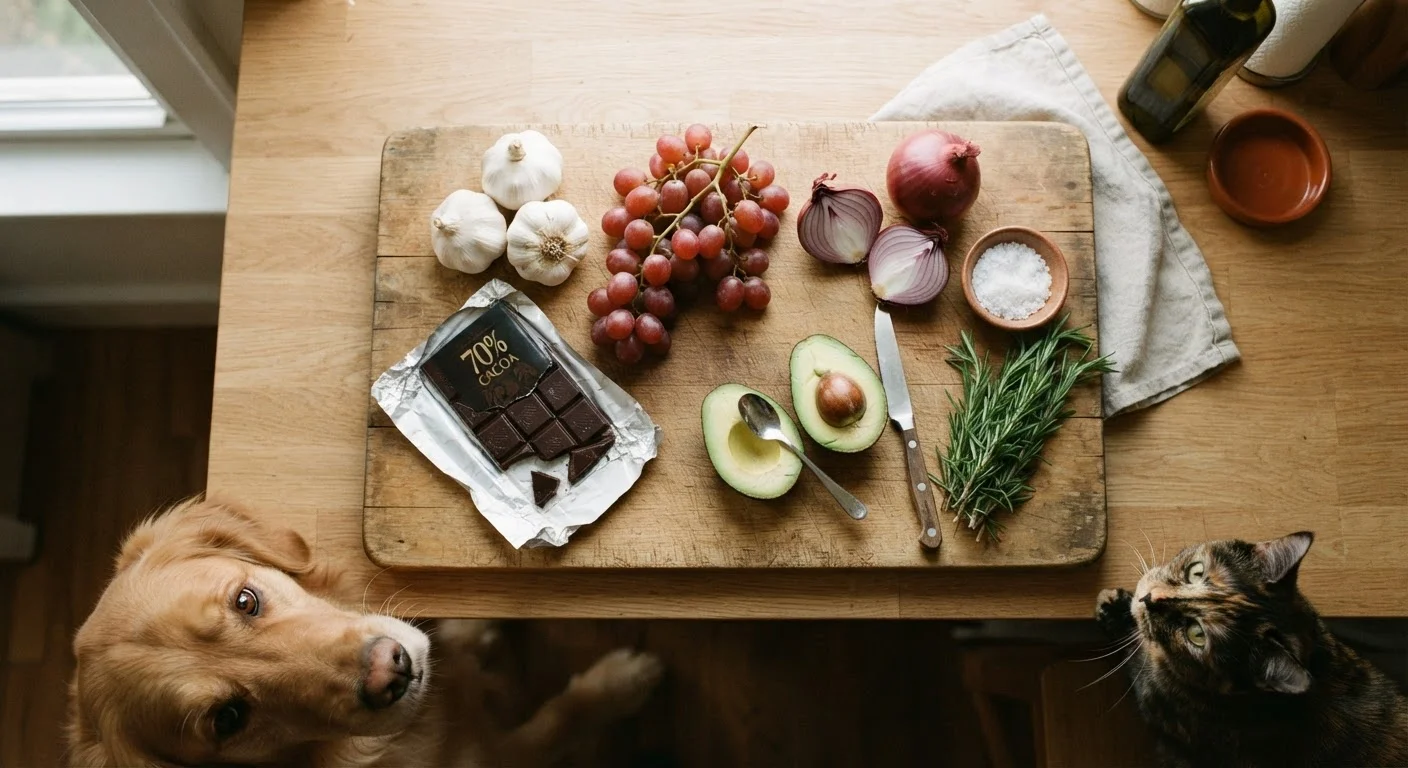
All allium-family vegetables are toxic to both dogs and cats, with cats being especially sensitive. These plants contain compounds called organosulfoxides that damage red blood cells, leading to a condition called hemolytic anemia. Powdered forms - such as garlic powder or onion soup mix - are more concentrated and therefore more dangerous than fresh. Symptoms may be delayed by several days, making the exposure easy to miss.
Grapes and Raisins
Even small amounts of grapes or raisins can cause acute kidney failure in dogs. The exact toxic agent has not been definitively identified, which means no amount can be considered safe. Cats appear less commonly affected, but the risk is not zero. Raisins in baked goods (bread, cookies, trail mix) are a frequent hidden source.
Xylitol
This sugar alcohol is used as a sweetener in many sugar-free products - chewing gum, some nut butters, candy, baked goods, and certain medications. In dogs, xylitol causes a rapid insulin release that can produce severe hypoglycemia (dangerously low blood sugar). Liver failure is also possible at higher doses. Read ingredient labels carefully on any sugar-free product.
Chocolate and Caffeine
Chocolate contains theobromine and caffeine, both of which dogs and cats cannot metabolize efficiently. Dark chocolate and baking chocolate contain far higher concentrations than milk chocolate, but no form is safe. Symptoms include vomiting, tremors, rapid heart rate, and in severe cases, seizures. Coffee, tea, energy drinks, and caffeine supplements carry similar risks.
Macadamia Nuts
Macadamia nuts cause weakness, hyperthermia, tremors, and vomiting in dogs. The mechanism is not fully understood, and toxicity appears to be dose-dependent. Avoid any baked goods or trail mixes containing them.
Avocado
Avocado contains persin, a fungicidal toxin concentrated in the leaves, skin, and pit, with smaller amounts in the flesh. It can cause vomiting and diarrhea in dogs and cats, and is more severely toxic to birds and some exotic animals. The pit also presents a choking and intestinal blockage hazard.
Raw Dough Containing Yeast
Unbaked bread dough can rise inside a pet's warm stomach, causing dangerous distension. Fermenting yeast also produces ethanol as a byproduct, which can lead to alcohol poisoning. Keep raw dough tightly covered and away from counter-surfing pets.
Alcohol
Pets are far more sensitive to ethanol than humans. Even small quantities from drinks, cooking wine, or fermented foods can cause vomiting, disorientation, breathing difficulties, and in serious cases, coma. There is no safe threshold.
Understanding how food labels work is also useful context - our article on commonly misunderstood pet food ingredients can help you read products more critically.
A Note on 'Small Amounts Are Fine'
For some toxins on this list - particularly grapes, raisins, and xylitol - there is no established safe dose. Individual animals can react very differently, and factors like body weight, age, and underlying health conditions all influence severity. Assuming a small quantity is harmless is a risk not worth taking. When in doubt, contact a veterinary professional.
What To Do If Your Pet Eats Something Harmful
Acting quickly matters. If you suspect ingestion, note the substance, the estimated amount, and the time - your vet will ask for all three. Do not induce vomiting unless a veterinarian or poison control specialist explicitly instructs you to do so; for certain substances, vomiting causes additional harm.
In the United States, the ASPCA Animal Poison Control Center operates a 24-hour hotline. A consultation fee typically applies, but it provides direct access to veterinary toxicologists. Your veterinarian can also advise whether an emergency clinic visit is necessary.
Having a pet first aid kit ready at home won't treat a poisoning, but it positions you to manage other emergencies while you reach professional help. Prevention - secured cabinets, covered trash bins, and household members who understand these risks - remains the most reliable safeguard.
This article is for general informational purposes only and does not constitute veterinary or medical advice. Always consult a licensed veterinarian for guidance specific to your pet's health and situation.