How Each Mechanism Actually Works
The surface-level pitch is identical - spend money, get some back - but the plumbing underneath is quite different. Understanding that difference helps you use each tool on its own terms.
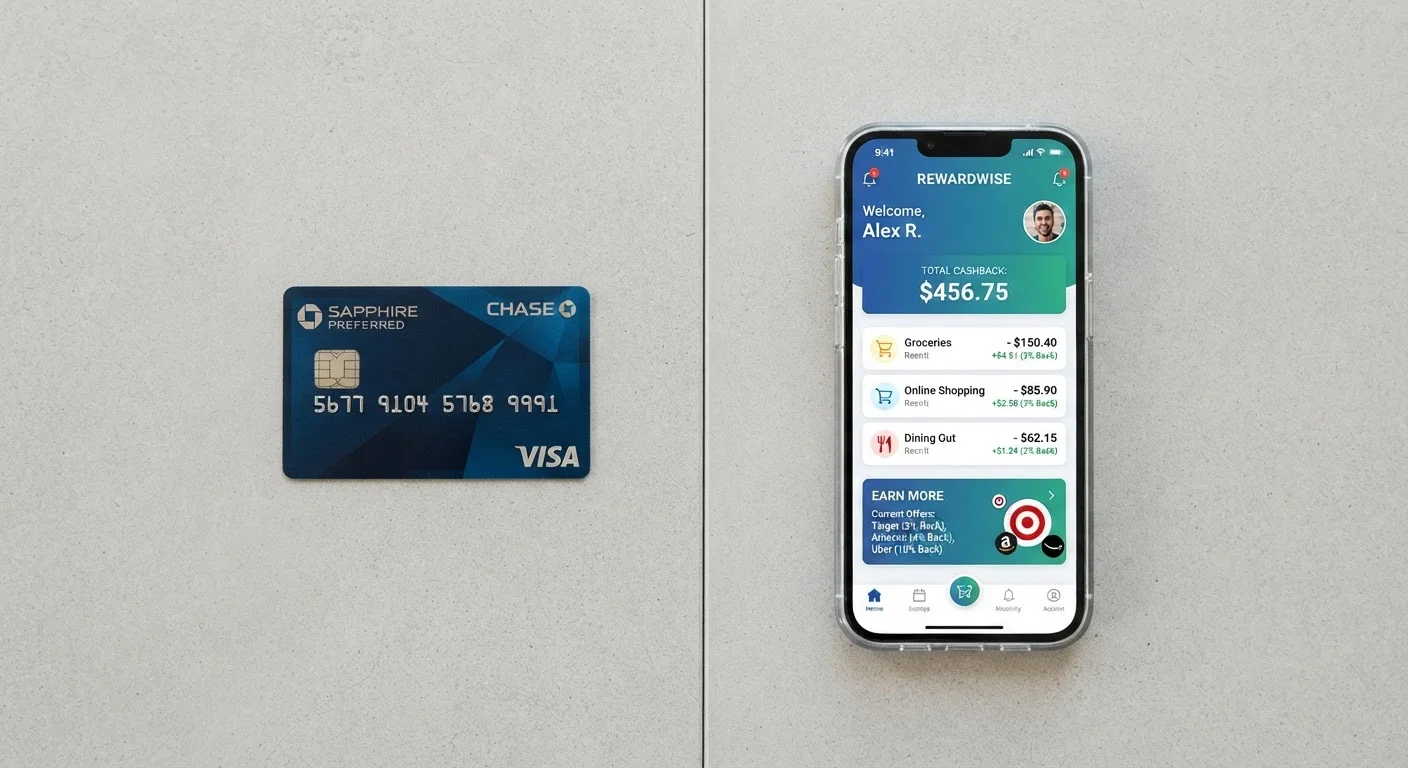
Cashback credit cards embed rewards directly into the card's payment network. Each time you make a qualifying purchase, the card issuer credits a percentage of the transaction to your rewards balance. That percentage is funded primarily by interchange fees: the small fee a merchant's bank pays to the cardholder's bank every time the card is swiped. The card issuer shares a slice of that revenue with you as cashback. No separate account, no activation - the earning happens at the network level.
Cashback apps operate on a different model. These are browser extensions, mobile apps, or web portals that sit between you and a retailer. When you activate an offer through the app and then complete a qualifying purchase, the retailer pays the app provider a referral or marketing fee, and the app passes a portion back to you. Because this is marketing spend rather than interchange revenue, rates can vary sharply by retailer and promotion period. For a deeper look at how these models compare to points and loyalty schemes, see how each reward model works.
| Criterion | Cashback Credit Cards | Cashback Apps |
|---|---|---|
| How rewards are funded | Interchange fees shared by card issuer | Retailer marketing / referral fees |
| Activation required | No - automatic at point of sale | Yes - must activate offer before purchase |
| Credit check required | Yes - tied to credit application | No - links to debit card or bank account |
| Risk of eroding savings | Interest charges if balance not cleared | Forgetting to activate; offer expiry |
| Retailer coverage | Any merchant that accepts the card network | Limited to participating retailers per platform |
| Redemption process | Statement credit, check, or bank deposit | PayPal, gift card, or bank transfer (minimums apply) |
| Stackable with the other tool | Often yes, subject to app terms | Often yes, subject to offer exclusions |
The Real Costs Hidden in Each Approach
Neither route is truly free of trade-offs. Knowing where the friction lives helps you avoid the most common ways each tool erodes its own value.
With cashback credit cards, the dominant risk is interest. If you carry a balance month to month, the APR on most cards will far exceed any cashback rate earned. A 2% cashback rate on $500 of spending yields $10 in rewards; a single month of interest at a typical card APR on that same balance can cost several times that. The math only works in the cardholder's favor when the balance is cleared in full each billing cycle. There are also annual fees on some cards - verify whether your actual spending patterns generate enough cashback to justify the cost. Common cashback misconceptions covers several of these assumptions in more detail.
Cashback apps carry a different friction: friction of use. You must remember to activate offers before shopping, and many deals expire or are retailer-specific. Earnings often sit in a pending state for days or weeks while the return window closes, and most platforms impose a minimum balance before you can withdraw. Some apps also require linking a bank account or debit card, which introduces a data-sharing consideration worth reviewing in the app's privacy policy.
~1-5%
Typical cashback rate range on credit cards
Card cashback rates generally fall between 1% flat and 5% in rotating or fixed bonus categories, according to publicly available card disclosures.
Varies widely
App cashback rates by retailer
App-based cashback can range from under 1% to double-digit percentages on select promotional offers, depending on the retailer's marketing spend at the time.
$25-$30
Common minimum withdrawal threshold on cashback apps
Many major cashback app platforms require users to accumulate a minimum balance before funds can be transferred, as stated in their published terms.
Stacking: When Both Tools Work Together
One of the most practical insights in this space is that cashback credit cards and cashback apps are not mutually exclusive. For online purchases in particular, it is often possible to activate an offer through a cashback app or portal and then complete the transaction using a cashback credit card. If both the app's terms and the card's terms allow it, you may receive a rebate from the retailer via the app and a card reward from the issuer simultaneously.
Not every retailer or card program permits stacking, and the app's terms of service are the governing document - some portals explicitly exclude purchases made through certain card-linked offer programs. Before assuming you can combine rewards, read the exclusions section of the cashback app's offer page. For practical guidance on maximizing this approach online, getting the most from online cashback portals walks through activation, tracking, and claiming in detail.
If your spending is heavily concentrated in specific categories - groceries, gas, dining - it is also worth comparing whether a category-specific card structure might outperform a flat-rate card when combined with app offers. Flat-rate versus tiered cashback cards breaks down those trade-offs clearly.
This article is for general informational and educational purposes only and does not constitute financial or legal advice. Reward program terms, rates, and conditions vary by provider and are subject to change. Consult a qualified financial professional before making decisions based on your individual circumstances.