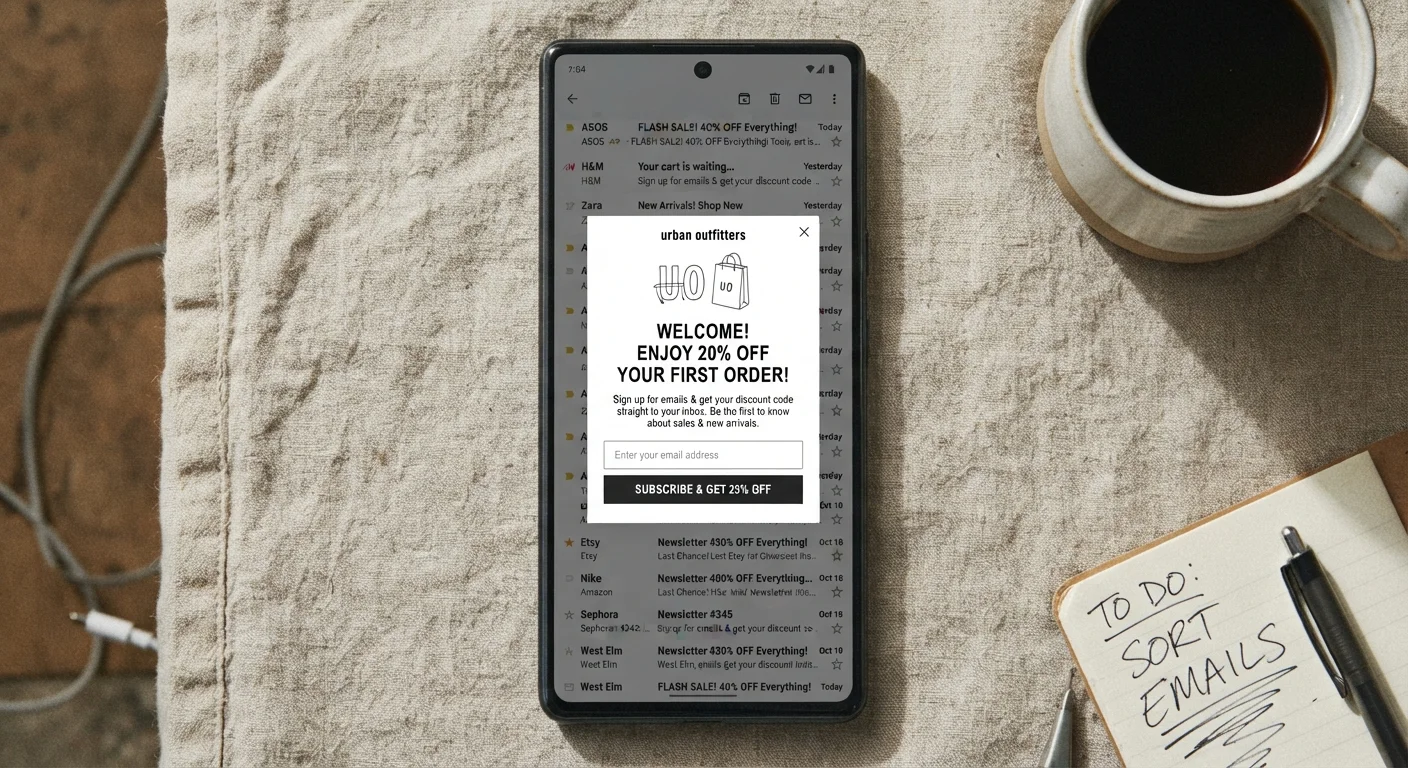
What You're Actually Agreeing To
When a retailer offers 10% or 15% off your first order in exchange for your email address, the transaction looks simple. But understanding what's on both sides of that exchange helps you decide whether it makes sense for your situation.
You're not just getting a code - you're joining a marketing list. That means ongoing promotional emails, behavioral tracking tied to your address, and in many cases, data shared with third-party advertising platforms. Retailers use email engagement data (opens, clicks, purchase history) to refine future targeting. This is standard practice and disclosed in most privacy policies, but many shoppers don't read those before subscribing.
It's also worth knowing how the code itself works before you sign up. Single-use codes behave differently from public promo codes - welcome codes are almost always single-use and tied to the email address you registered with, meaning they can't be shared or reused. If you've already subscribed to that retailer's list in the past, a new signup may not generate a working code at all.
The Real Advantages
Immediate, tangible discount on a planned purchase
Welcome codes commonly range from 10% to 20% off and apply at checkout with no additional steps, making them one of the more reliable ways to reduce the cost of a purchase you were already going to make.
Access to subscriber-only sales and early access
Many retailers reserve advance notice of sales, exclusive flash events, or loyalty price breaks for email subscribers, giving you a timing advantage that isn't available through public coupon searches.
Cart abandonment codes can follow automatically
Once you're on a retailer's email list, leaving items in your cart without checking out often triggers an automated follow-up discount - a useful tactic for considered purchases where you're willing to wait.
Free to join with minimal commitment required
Email subscriptions carry no financial cost and can typically be cancelled at any time, making the barrier to entry low if you're strategic about how you manage the resulting inbox volume.
Beyond the welcome offer, a well-managed retail email list can surface deals that aren't posted publicly. Sale previews, loyalty milestones, and cart-abandonment triggers are often distributed exclusively through email - and these overlooked coupon sources can deliver savings you wouldn't find through a standard promo code search.
For shoppers consolidating purchases around specific retailers - say, one home goods store or one clothing brand - staying subscribed can also provide price-drop alerts that inform smarter timing decisions. The key is whether the emails you receive contain genuinely actionable information rather than daily noise designed to trigger browsing.
The Genuine Drawbacks
Promotional emails increase unplanned spending
Regular exposure to sale announcements and curated product emails is designed to generate browsing and purchasing behavior beyond your original intent, which can erode any savings the welcome code delivered.
Welcome codes often carry restrictive terms
Minimum spend thresholds, category exclusions, and expiry windows mean the advertised discount frequently can't be applied to the specific item or order size a shopper has in mind.
Your email address enters a commercial data ecosystem
Retail email lists are routinely used for behavioral profiling and may be matched against third-party advertising networks, extending the data trail beyond the retailer's own communications.
Inbox management becomes an ongoing maintenance task
Subscribing to multiple retailer lists without a system - like a dedicated address or folder filters - creates inbox clutter that takes ongoing time and attention to manage effectively.
Prior subscribers may not qualify for a new welcome offer
Retailers typically issue welcome codes only to genuinely new email subscribers; if your address is already in their system, attempting to re-signup for the offer may produce no usable code.
The most documented risk isn't inbox clutter - it's purchase frequency. Research in consumer behavior consistently shows that exposure to promotional emails increases unplanned buying. If a 15% welcome code saves you $12 but the subscription subsequently prompts two impulse purchases over the next month, the net effect on your spending is negative. Staying within budget while using promo codes requires deliberate habits that most shoppers don't put in place at the moment of signup.
Data privacy is a secondary but legitimate concern. Email addresses fed into retail CRMs are frequently matched against broader advertising data networks. If that tradeoff bothers you, using a dedicated address limits the exposure to channels you've explicitly opted into. Common coupon myths - including the assumption that unsubscribing fully removes your data - are worth reviewing before you sign up.
How to Make the Exchange Work in Your Favor
The most effective approach is structural. Create a free secondary email address used exclusively for retail signups - this keeps promotional mail out of your primary inbox and makes it easy to batch-check offers when you're ready to buy, rather than when a retailer wants you to.
Check the Terms Before You Subscribe
Welcome code terms vary significantly between retailers. Common restrictions include minimum cart values (often $50-$75), exclusions on already-discounted items, specific brand carve-outs, and expiry windows as short as 24-48 hours. Reviewing the offer's fine print - usually accessible via a small link in the signup popup - before entering your email helps you confirm the code will actually work for your intended purchase. This is especially relevant when comparing it to a publicly available code you may have already found through other means.
Before subscribing, confirm that the welcome code doesn't require a minimum spend that exceeds your planned purchase, or exclude the specific category you're shopping. Retailers commonly restrict welcome codes on sale items, certain brands, or orders below a threshold. Reading the terms attached to the offer before signing up avoids the friction of discovering restrictions at checkout.
Once you've redeemed the code, you can unsubscribe - though some retailers will throttle or deactivate future codes for accounts that consistently opt out quickly. If you expect to shop with that retailer again, staying subscribed but filtering their mail into a folder you check intentionally is a practical middle ground. Understanding how retailers decide who receives promo codes can also help you anticipate when staying on a list is likely to pay off versus when it's purely noise.