How Couponing Actually Changed
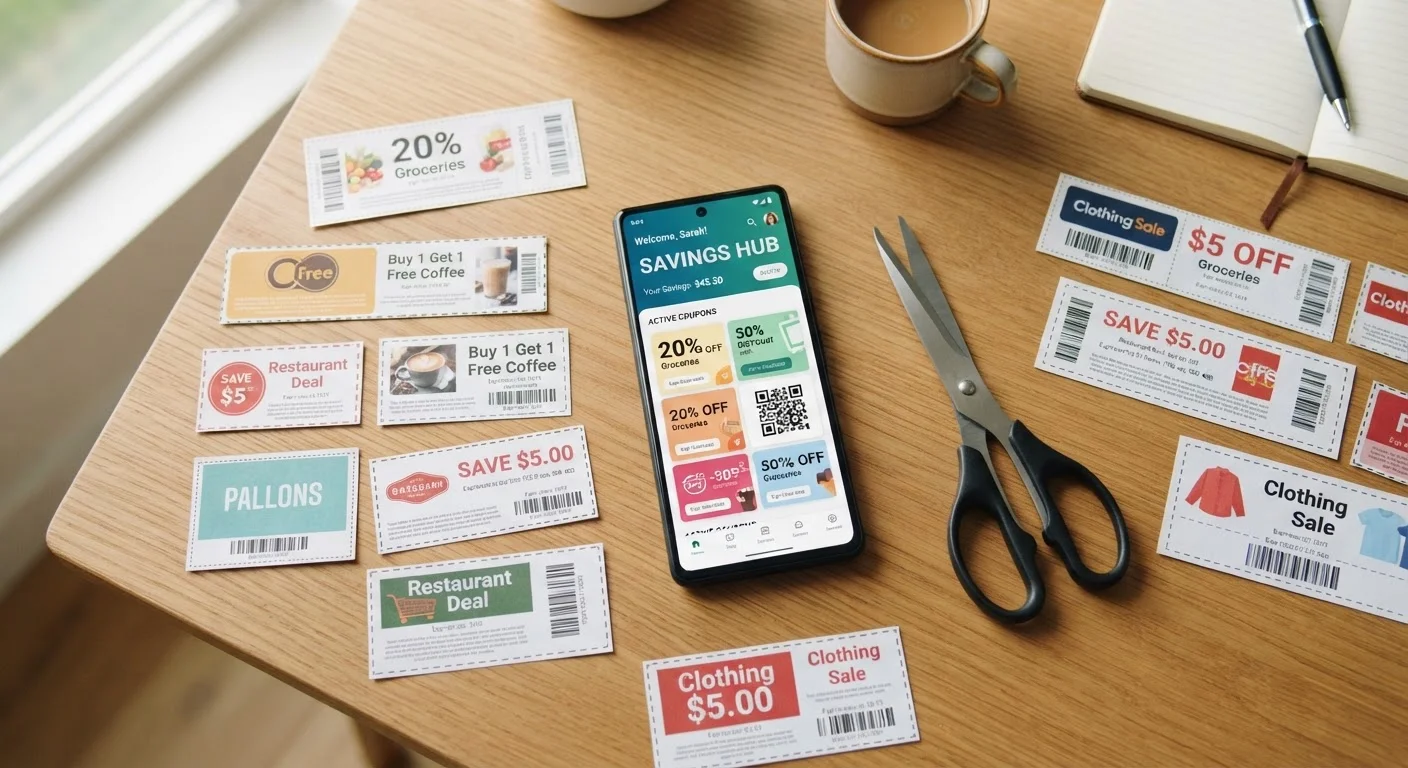
The image of someone hunched over a Sunday newspaper with scissors is mostly a relic. Today, the vast majority of coupons are issued and redeemed digitally - through retailer apps, loyalty accounts, browser extensions, and email campaigns. According to data from Inmar Intelligence, digital coupon redemptions have grown substantially year over year, while print coupon usage has declined steadily since the mid-2010s.
That shift changes where you look for discounts, but it doesn't change the underlying math: a coupon only saves you money if it reduces the price of something you were already going to purchase. The medium changed; the discipline required to use coupons intelligently did not. Understanding how coupons move from issue to expiry helps explain why some codes seem to disappear overnight while others linger for months.
Myths Worth Busting Right Now
A surprising number of couponing beliefs circulating online are either outdated or simply inaccurate. Some lead shoppers to waste hours hunting for codes that don't exist. Others cause people to overspend chasing a discount. The myth-fact pairs below cover the most consequential misconceptions - the ones that actually affect your wallet.
Myth
You need to spend hours each week clipping and organizing coupons to see real savings.
Fact
A focused 10-15 minutes before a planned shopping trip - checking retailer apps and loyalty accounts - typically captures most available savings.
The "extreme couponing" approach popularized by reality TV required enormous time investment for savings that depended on specific store policies, double-coupon days, and print inserts that have mostly disappeared. Modern couponing is more efficient: retailers consolidate offers in apps, and loyalty accounts surface personalized deals automatically. Time-for-savings math has improved significantly - you don't need to treat couponing as a part-time job.
Myth
All coupon codes found online are valid and worth trying.
Fact
A large share of codes on generic aggregator sites are expired, retailer-specific, or simply fabricated - and chasing them wastes more time than the discount is worth.
Code aggregator sites often pull from automated databases that aren't consistently maintained. An expired code from two years ago can still rank highly in search results. The more reliable sources are the retailer's own email list, its app notifications, and documented tactics like cart-abandonment emails. Common coupon myths like this one can quietly cost shoppers hours of fruitless searching.
Myth
Stacking coupons always works - just apply every code you find.
Fact
Stacking is only permitted when a retailer's terms explicitly allow it; attempting to stack otherwise typically results in only the higher-value code being applied, or an error.
Retailer coupon policies vary significantly. Some allow combining a store-issued coupon with a manufacturer coupon; others block any combination. E-commerce checkout systems often apply only the last entered code, overriding any previous one. Reading the terms attached to each coupon - usually a small-print link - takes 30 seconds and prevents confusion at checkout. When stacking is permitted and you use it correctly, the compounded discount can be substantial.
Myth
A coupon always saves you money compared to buying elsewhere.
Fact
A 20% coupon off an inflated price can still leave you paying more than a competitor's regular price - comparison shopping is a necessary companion to couponing.
Retailers set baseline prices independently, so a coupon only confirms savings relative to that retailer's own price. A product discounted 15% at one store may still cost more than the same product at full price at another. Effective couponing pairs discounts with price comparison habits - using the coupon as the final step after confirming the starting price is reasonable. The coupon is a tool, not a guarantee of the best net price.
Myth
Digital coupons require a lot of technical skill or special apps to use.
Fact
Most digital coupons are accessible through standard retailer websites or basic smartphone apps, with no technical expertise required beyond creating a free account.
The barrier to digital couponing is lower than many shoppers assume. A free loyalty account at a grocery or pharmacy chain typically surfaces clippable digital coupons that apply automatically at checkout when you scan your loyalty card or enter your phone number. Browser extensions that flag available codes at online checkout require a one-time install. The learning curve is measured in minutes, not hours, and the full range of coupon and promo code tools available to shoppers is broader than most realize.
What Still Genuinely Works
Strip away the myths and a clear set of reliable tactics remains. These aren't hacks or loopholes - they're how modern discount systems are actually designed to function.
- Loyalty program coupons: Retailer apps like those from major grocery chains regularly push personalized offers to frequent shoppers. These tend to be more targeted and higher-value than generic codes.
- Cart abandonment triggers: Many e-commerce platforms automatically send a discount code when you leave items in your cart without checking out. This is a documented retention tactic, not a coincidence. There are more places discount codes hide than most shoppers check.
- Stacking when the rules allow: Some retailers permit combining a store coupon with a manufacturer coupon, or a loyalty discount with a promo code. Read the terms - when stacking is allowed, it compounds savings meaningfully.
- Pre-checkout verification: A quick, systematic check before placing any order prevents leaving valid codes on the table. See the coupon-readiness checklist for a practical routine.
60%+
US shoppers using digital coupons
Statista and Inmar Intelligence research consistently show a majority of US consumers now use digital coupons, a share that has grown each year since 2015.
~$1,800
Estimated annual grocery savings for active coupon users
Industry estimates suggest disciplined coupon users can reduce annual grocery spending meaningfully, though individual results depend heavily on purchasing habits and retailer availability.
What to Ignore (and Why)
Not every couponing practice deserves your time. A few to skip:
- Extreme stockpiling for its own sake: Buying 20 bottles of condiment because a coupon makes them cheap is only savings if you use all 20 before they expire. Dead inventory in a pantry isn't a win.
- Third-party code aggregator rabbit holes: Spending 15 minutes trying 40 non-working codes from a generic coupon site costs more in time than the discount would have saved. A disciplined two-minute check is more efficient.
- Buying out of category to hit a threshold: If a code requires a $75 minimum and you only need $50 worth of goods, adding $25 of items you don't need to "unlock" the discount means you've spent $25 more, not saved anything.
The goal is net savings - money you keep after the transaction, not nominal discounts applied to an inflated basket. For a deeper look at staying within budget while using promo codes, see how to make codes work without overspending.
Discounts Can Drive Overspending
Research in consumer behavior consistently shows that the presence of a discount can increase overall basket size, even when shoppers intend to save. Before applying a code, confirm your cart contains only items you planned to buy. A 30% discount that prompted an unplanned $40 purchase is not a savings event - it's a $28 expenditure you wouldn't have made otherwise.
This article is for general informational purposes only and does not constitute financial advice. Savings outcomes vary based on individual purchasing habits and retailer policies.