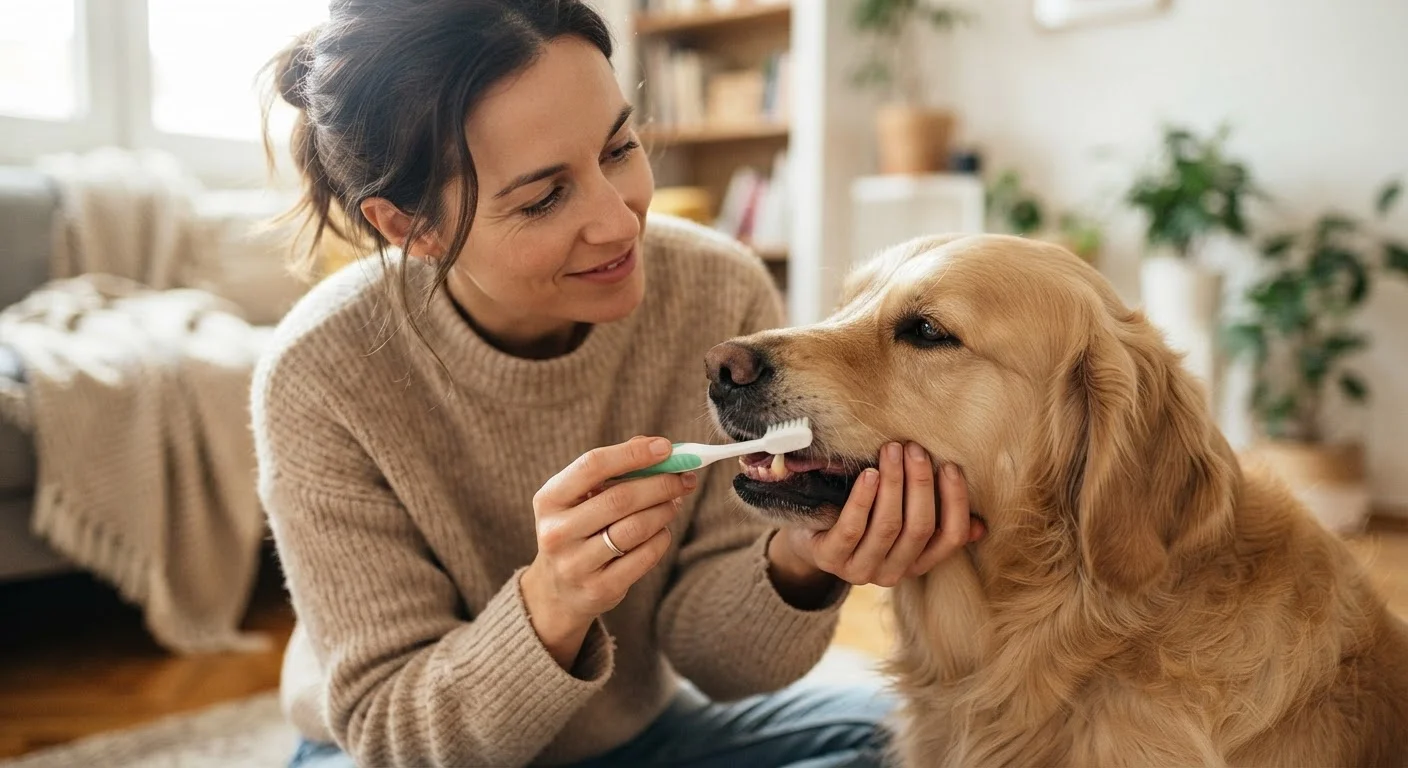
Why Pet Dental Health Matters
Periodontal disease - infection and inflammation of the structures supporting the teeth - is one of the most frequently diagnosed conditions in dogs and cats. Veterinary research consistently shows that the majority of pets show some degree of dental disease by age three. Left unmanaged, the consequences extend beyond bad breath: bacteria from infected gums can travel to the bloodstream and, over time, affect the heart, kidneys, and liver.
The good news is that dental disease is largely preventable. Home care, started early and maintained consistently, meaningfully slows the progression of plaque and tartar. As our article on preventive pet care costs explains, small daily habits can substantially reduce the need for expensive veterinary interventions later.
This article provides general educational information about home dental care for pets and is not a substitute for professional veterinary advice. Always consult your veterinarian for guidance specific to your pet's health.
Key Concepts in Pet Oral Care
Understanding a few core terms makes it easier to follow your vet's recommendations and evaluate products.
Plaque
A soft, sticky film of bacteria that forms on teeth after eating. It can be removed by brushing before it hardens.
Tartar (Calculus)
Hardened plaque that has mineralized onto the tooth surface. Once formed, it cannot be removed by brushing and requires professional scaling.
Periodontal disease
Infection and inflammation affecting the gums, ligaments, and bone that support the teeth. It ranges from mild gingivitis to severe tooth loss.
Gingivitis
The earliest, reversible stage of gum disease, characterized by redness and mild swelling of the gum tissue. Good home care can help reverse it.
VOHC Seal
The Veterinary Oral Health Council seal indicates that a product has met published scientific standards for reducing plaque or tartar in pets.
Enzymatic toothpaste
A pet-safe toothpaste containing enzymes that help break down bacteria in the mouth, offering a chemical cleaning effect alongside mechanical brushing.
How to Introduce Tooth Brushing
The most effective home dental tool is a soft-bristled toothbrush paired with pet-safe toothpaste. The challenge is usually acceptance - most pets need a gradual introduction over days or weeks before tolerating a full brushing session.
- Day 1-3: Finger and flavor. Let your pet lick a small amount of pet toothpaste off your fingertip. This builds positive association with the taste and your hand near the mouth.
- Day 4-7: Gentle gum contact. Wrap a finger in a soft cloth or use a finger brush. Rub gently along the outer gum line for a few seconds, then reward calmly. Keep sessions under 30 seconds.
- Week 2 onward: Introduce the brush. Let your pet sniff and lick the toothbrush before use. Brush in small circular motions along the gumline, focusing on the outer surfaces - the tongue keeps the inner surfaces relatively cleaner.
Reward Calmness, Not Endurance
Use small, high-value rewards immediately after each brushing session to reinforce cooperation. Keep sessions short - 30 to 60 seconds is plenty for beginners. Over time, most pets habituate and the process becomes quick and low-stress for everyone involved.
Aim to make every session end on a positive note. Short, calm, rewarded sessions train cooperation far better than longer, forced ones. Older pets can still learn; it simply may take more patience. If you have an ageing dog or cat, see our guide on caring for older pets for additional context on managing their changing health needs.
Supplemental Options When Brushing Isn't Possible
Brushing is the gold standard, but some pets - particularly cats - resist it despite patient training. Several supplemental options have evidence behind them, though none fully replicate mechanical brushing.
- Dental chews and treats: Look for the Veterinary Oral Health Council (VOHC) seal, which indicates the product has met published standards for reducing plaque or tartar. Chews work through abrasion and, in some cases, active ingredients.
- Water additives and oral rinses: These can inhibit bacterial growth in the mouth. Acceptance varies - some pets refuse altered water, so introduce gradually and monitor intake.
- Dental diets: Specially formulated kibble with a larger, fibrous texture can provide a mild abrasive effect. Your vet can advise whether a dental diet is appropriate for your pet's overall nutritional needs. For broader feeding guidance, visit our pet nutrition hub.
- Dental gels and enzymatic products: Applied directly to the gumline with a finger, these can help reduce bacterial load. Many pets tolerate them better than a brush.
Supplements Support - They Don't Replace - Professional Care
Even the most diligent home routine cannot remove tartar that has already hardened, or detect disease below the gumline. Your veterinarian may recommend professional dental cleanings at intervals based on your pet's individual risk factors. Think of home care and professional care as working together.
No supplement replaces professional cleaning. These tools are best understood as ways to extend the time between veterinary cleanings - not to eliminate the need for them.
Warning Signs That Warrant a Vet Visit
Home care has clear limits. If you notice any of the following, schedule a veterinary exam rather than trying to manage the issue at home:
- Persistent bad breath that does not improve with home care
- Visible yellow or brown tartar buildup, especially at the gumline
- Red, swollen, or bleeding gums
- Loose or missing teeth
- Reluctance to eat hard food, dropping food, or chewing on one side
- Excessive drooling or pawing at the face
These signs may indicate advanced periodontal disease, tooth root abscess, or other conditions that require professional treatment - sometimes including dental X-rays and tooth extraction under anesthesia. Pets do not reliably show pain until disease is advanced, so routine veterinary dental exams are important even when no obvious symptoms are present. This is especially relevant for pets managing other health conditions; our guide on managing chronic pet conditions discusses how overlapping health issues can complicate care. If you're curious about other common misconceptions around pet health, our article on popular pet health myths is worth a read.