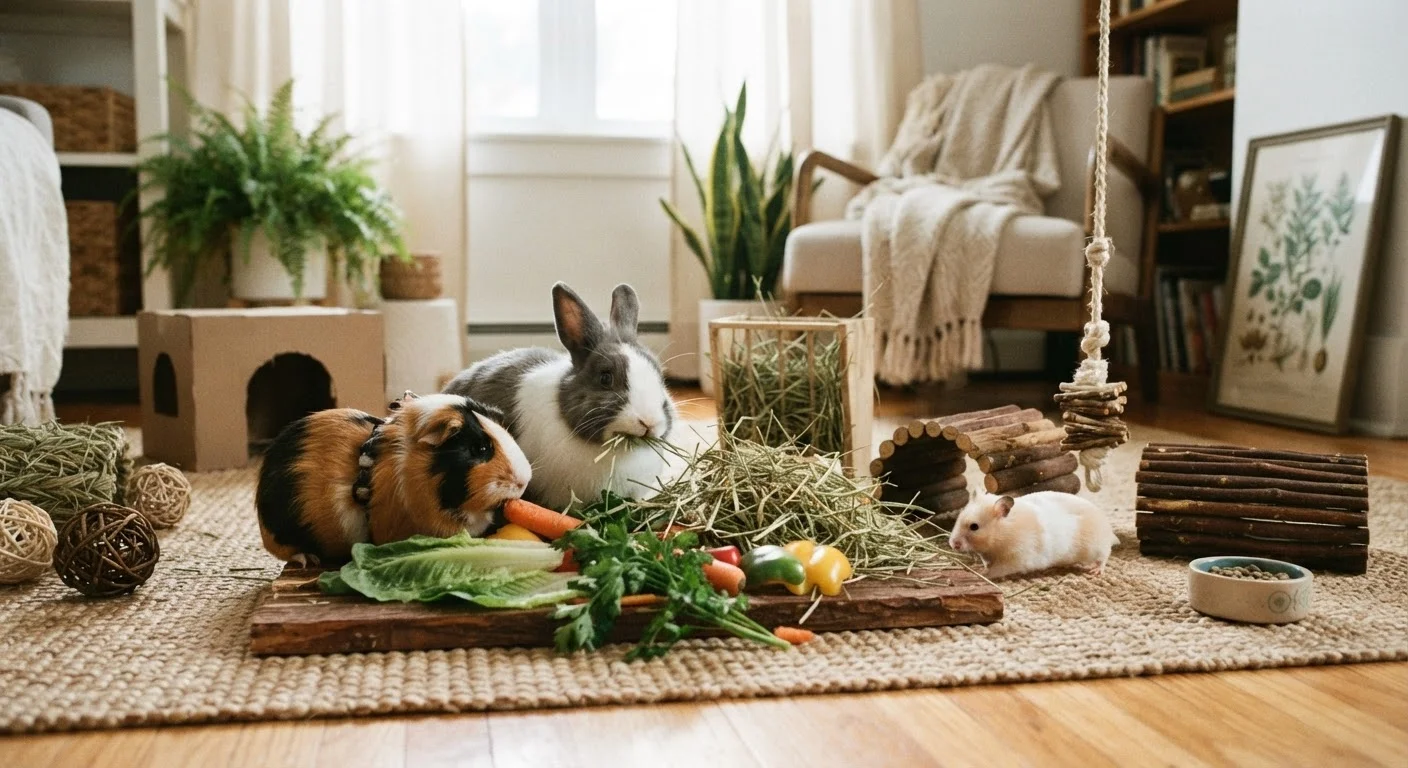
Why Small Pets Are Not Low-Maintenance
Rabbits, guinea pigs, and hamsters are often marketed as easy starter pets, but this reputation does them a disservice. Each species is a complex animal with specific behavioral, nutritional, and environmental needs. Underestimating those needs is one of the leading reasons small mammals end up in shelters or suffer preventable illness.
Before bringing any small mammal home, it helps to understand that you are committing to daily feeding, fresh water, bedding maintenance, and social interaction - every single day, for a lifespan that may range from two years (dwarf hamsters) to ten or more years (well-cared-for rabbits). That is a real responsibility, not a casual one.
The good news: meeting these needs does not require a large budget if you plan thoughtfully. For cost-conscious feeding strategies that do not sacrifice quality, see our guide on stretching your pet food budget.
Malocclusion
A condition where teeth do not align properly. In rabbits and guinea pigs, whose teeth grow continuously, malocclusion can prevent normal eating and requires veterinary treatment.
Hay (grass hay)
Dried grass - such as Timothy or orchard grass - that forms the dietary foundation for rabbits and guinea pigs. It supports digestive health and natural tooth wear.
Prey animal instinct
The behavioral tendency of animals like rabbits and guinea pigs to hide signs of illness or weakness, which evolved as a survival mechanism but makes health monitoring more challenging for owners.
Substrate
The bedding or material placed on the floor of a pet's enclosure. For hamsters, deep substrate allows natural burrowing behavior, which is important for mental wellbeing.
Vitamin C synthesis
The biological process of producing vitamin C internally. Guinea pigs lack this ability and must obtain vitamin C through their daily diet, or they risk developing scurvy.
Enrichment
Activities, objects, or environmental features that stimulate a pet's natural behaviors - such as foraging, burrowing, or exploring - and support psychological health.
Housing and Space Requirements
Enclosure size is one of the most commonly underestimated aspects of small pet care. Many cages sold at general retail stores fall well below what veterinary and animal welfare organizations consider adequate.
- Rabbits need a living space where they can take at least three full hops in any direction, plus daily access to a larger exercise area. A minimum enclosure floor area of around 12 square feet, paired with several hours of supervised free-roam time, is a widely cited guideline.
- Guinea pigs are active and benefit from a minimum of 7.5 square feet of floor space for a pair, with more being better. C&C (cube and coroplast) style enclosures are a popular, customizable, and often affordable option.
- Hamsters - especially Syrian hamsters - are frequently housed in enclosures far too small. Many experts now recommend a minimum of 450 square inches of uninterrupted floor space, with deep substrate for burrowing.
All enclosures should be cleaned regularly. Paper-based bedding is a safe, absorbent choice for all three species. Avoid cedar or pine shavings, which contain compounds that may irritate respiratory systems.
DIY Enclosures Can Save Money
Commercially sold cages are often undersized and overpriced. C&C (cube and coroplast) enclosures for guinea pigs and rabbits can be assembled from grid panels and corrugated plastic sheets at a fraction of the cost of pet-store equivalents. For hamsters, large storage bins with ventilated lids are a widely used, budget-friendly alternative that provides more floor space than most retail cages.
Nutrition Fundamentals for Rabbits, Guinea Pigs, and Hamsters
Diet is where species differences matter most, and getting it wrong has direct health consequences.
Rabbits
Unlimited grass hay (Timothy or orchard grass for adults) should make up around 80% of a rabbit's diet. Hay keeps the digestive system moving and naturally wears down continuously growing teeth. Fresh leafy greens like romaine, cilantro, and parsley complement the diet; pellets should be offered in limited quantities. Sugary treats - including most commercial rabbit treats - should be rare.
Guinea Pigs
Like rabbits, guinea pigs need unlimited hay as their dietary foundation. Critically, guinea pigs cannot synthesize their own vitamin C and must get it through food daily. Fresh bell peppers, leafy greens, and other vitamin C-rich vegetables fill this gap. Commercial pellets formulated for guinea pigs (not rabbits) can supplement the diet.
Hamsters
Hamsters are omnivores with a different nutritional profile. A quality hamster pellet or lab block forms the base, supplemented with small amounts of fresh vegetables and occasional protein sources such as plain cooked egg or mealworms. Avoid sugary fruits in large amounts, as hamsters are prone to diabetes - particularly dwarf species.
Explore more about pet nutrition principles that apply across species.
Social Needs and Enrichment
Social structure varies significantly across these three species, and respecting it matters for both mental and physical health.
Guinea pigs are highly social herd animals. Keeping a single guinea pig alone is widely considered detrimental to their wellbeing; same-sex pairs or small groups are strongly recommended. Rabbits also benefit from companionship - bonded pairs are generally happier and less destructive - but introductions require patience and a careful process. If you are adding a small pet to a home that already has animals, our guide on introducing a new pet to a multi-animal household offers practical guidance.
Hamsters, particularly Syrian hamsters, are solitary and should not be housed together past early development. Their enrichment needs are met through environmental complexity rather than companionship: deep burrowing substrate, tunnels, a large wheel (at least 10-11 inches for Syrians to prevent spinal curvature), and foraging opportunities.
For all three species, mental stimulation reduces stress-related behaviors and supports immune health. Rotate enrichment items, offer foraging opportunities, and allow species-appropriate handling on the animal's terms.
Recognizing Health Warning Signs
Small mammals are prey animals and instinctively conceal illness until they cannot. By the time symptoms are obvious, the animal may already be seriously unwell. This makes daily observation - not just feeding - a critical part of care.
Watch for these warning signs and contact a small-mammal-experienced veterinarian promptly if you observe them:
- Reduced or absent food and water intake
- Change in droppings (fewer, smaller, softer, or absent)
- Labored, noisy, or rapid breathing
- Lethargy, hunched posture, or reluctance to move
- Overgrown or misaligned teeth (malocclusion)
- Discharge from eyes, nose, or ears
- Loss of balance or head tilt
Routine preventive care significantly reduces the likelihood of costly emergencies. For a broader look at why wellness visits pay off over time, see why preventive pet care saves more than it costs.
This article is for general informational purposes only and is not a substitute for professional veterinary advice. Always consult a qualified veterinarian familiar with small mammals for guidance specific to your pet's health and care needs.