Why Introductions Require a Structured Approach
Animals are territorial by nature, and resident pets have established the home as their territory long before a newcomer arrives. An unmanaged introduction - even between otherwise friendly animals - can trigger defensive aggression, fear-based hiding, or ongoing conflict that becomes deeply entrenched. The good news is that most multi-species and same-species introductions can succeed when they follow a predictable, gradual framework grounded in animal behaviour science.
The core principle is systematic desensitisation: exposing each animal to the other in incrementally closer, lower-stakes ways, always at an intensity level below what triggers a stress response. Each successful, calm exposure builds a new, neutral or positive association. Before beginning any introduction process, working through a preparation checklist can help ensure your environment and mindset are ready - see our pet training preparation checklist for a useful starting framework.
The timeline varies considerably: some animals reach comfortable coexistence within a week; others need a month or more. Age, prior socialisation history, species pairing, and individual temperament all play a role. Patience is not optional - it is the primary tool.
Baby gate or exercise pen
Creates a physical barrier that allows animals to see and smell each other without the risk of direct contact during early introduction stages.
Separate bedding sets
Used to swap scents between animals before any visual meeting, helping each pet become accustomed to the other's smell in a low-stress way.
High-value treats
Provides positive reinforcement during controlled meetings, helping animals form a pleasant association with the other pet's presence.
Pheromone diffuser
Synthetic calming pheromones (species-specific) may help reduce baseline anxiety in resident pets during transition; consult your vet for guidance.
Leash and harness
Keeps a dog safely managed during supervised visual introductions, allowing you to calmly redirect without physical confrontation.
Step-by-Step Introduction Process
Follow these steps in sequence. Do not skip stages based on apparent progress - what looks like quick acceptance can mask suppressed stress that re-emerges later. Retreat to an earlier stage at any point if either animal shows sustained signs of distress.
Set up a dedicated safe room for the new pet
Before the new animal arrives, prepare a room with everything it needs: food, water, a litter box (for cats), bedding, and enrichment. This space serves as a decompression zone - a low-stimulus environment where the new pet can settle and begin to feel secure. Keep the door closed so resident pets cannot enter.
Allow the new pet at least 24 to 48 hours in this space before beginning any introductions. Rushing this stage undermines the animal's confidence and can increase reactivity later.
Begin scent swapping between animals
Exchange bedding or a soft cloth between the new pet's room and the resident pets' areas. Allow each animal to investigate the other's scent at its own pace, without any pressure or forced interaction. This is the foundation of a low-stress introduction.
Repeat this exchange daily for two to five days. You are looking for calm, curious investigation - sniffing without prolonged hissing, growling, or avoidance. If a resident pet shows strong negative reactions, continue swapping at that stage rather than advancing.
Introduce scent through a barrier (door or gate)
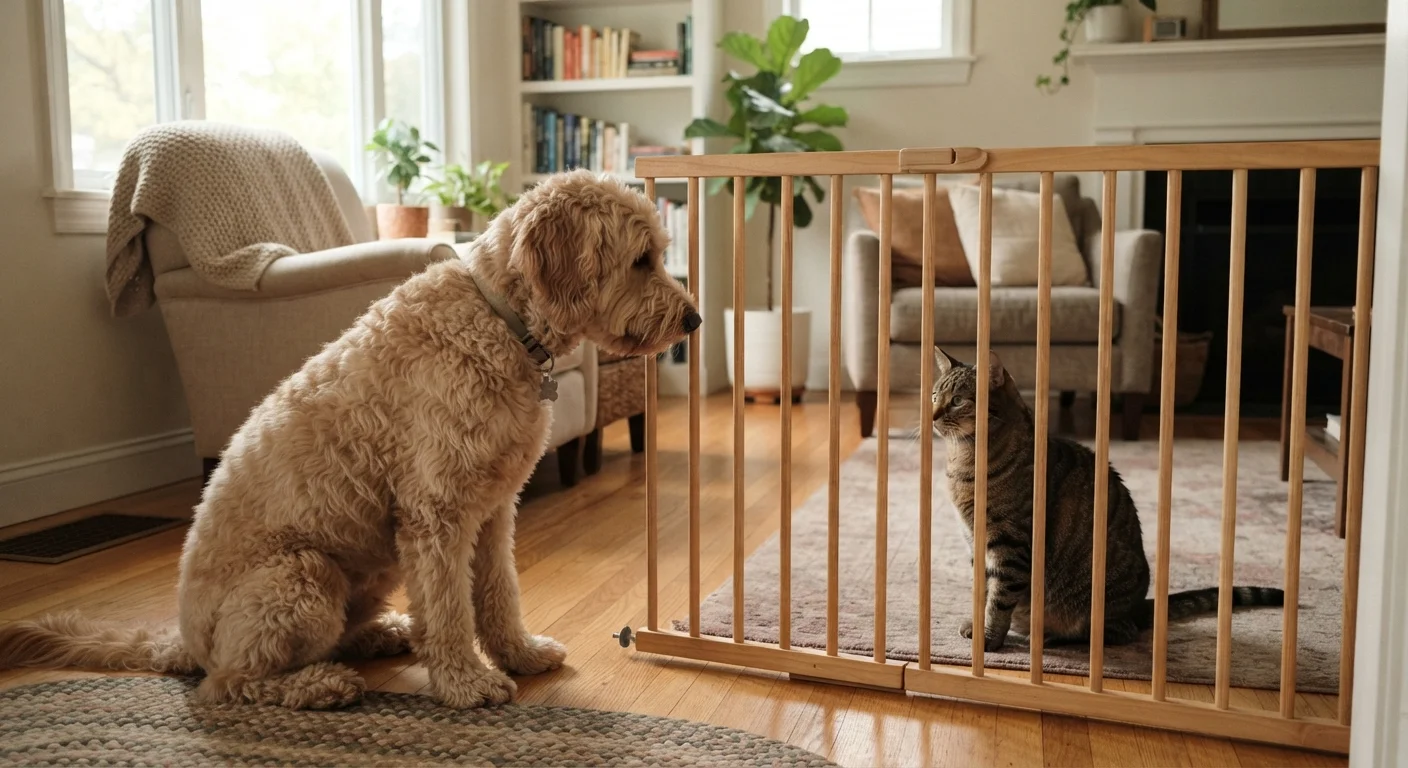
Once both animals appear relaxed around each other's bedding, allow brief, supervised sniffing under a closed door or through a baby gate. Neither animal should have physical access to the other yet. Offer treats to both animals during this stage to build a positive association with the experience.
Watch for relaxed body language: loose posture, neutral tail carriage, and brief curiosity followed by disengagement. Tense, fixated, or aggressive reactions indicate both animals need more time at the scent-swapping stage.
Move to controlled visual introductions
Open the barrier slightly or use a tall baby gate so both animals can see each other clearly. Keep dogs on a loose leash. Remain calm - your energy directly affects both animals. Offer treats for calm, disengaged behaviour rather than for sustained eye contact, which can escalate tension.
Keep these sessions brief: three to five minutes initially. End each session on a positive or neutral note, before either animal shows significant stress. Gradually increase duration over several days as both animals remain composed.
Allow supervised shared space time
When both animals consistently show relaxed responses during visual contact, allow them into a shared, neutral space together under close supervision. Keep the environment calm - no loud sounds, no chaotic play. Ensure each animal has an obvious exit route and never block retreat paths.
Continue to use treats to reward calm, non-reactive behaviour. Intervene early and calmly if tension escalates - a verbal interruption or brief separation is sufficient; avoid physical corrections, which can create fear and unpredictability.
Maintain separate resources and monitor long-term dynamics
Even after animals appear comfortable together, permanently maintain separate feeding stations, water bowls, and resting areas. Resource competition is a leading cause of ongoing tension in multi-pet homes. For cats, the general guidance is one litter box per cat plus one extra.
Continue monitoring interactions over weeks and months. Social dynamics in multi-pet households can shift as animals mature or as health changes occur. For more on managing pets with complex needs, see day-to-day guidance for pets with chronic conditions.
When to Pause and Seek Professional Help
If either animal shows sustained aggression, refuses to eat, or displays prolonged stress signals (hiding, excessive vocalisation, self-harm) after two to three weeks, stop advancing the introduction stages. Consult a veterinarian or certified animal behaviourist before continuing. Forcing animals together under high stress can set back progress significantly and may cause lasting fear responses.
If your resident pet has anxiety tendencies that may be amplified by a new arrival, the strategies outlined in our article on managing separation anxiety in dogs may provide additional useful context for supporting their wellbeing during the transition.
Timing Your First Meetings Well
Schedule initial face-to-face sessions after both animals have been exercised or have eaten - calmer energy states reduce reactivity. Keep first sessions to five minutes or fewer, then increase duration only as both animals show consistently relaxed body language.
Recognising Progress and Common Setbacks
Signs of genuine progress include: animals eating and sleeping normally, relaxed body language in shared spaces, voluntary proximity without fixation, and play behaviour (particularly in younger animals). Regression - such as a previously calm resident pet resuming avoidance or a new pet refusing to leave its safe room - is normal and not a sign of failure. Simply step back one stage and slow the pace.
Some pairings genuinely require more time than others. A resident cat with no prior exposure to dogs, for example, typically needs a longer scent and barrier phase than one that has lived with dogs before. Species-specific needs matter too: if you are introducing a small mammal such as a rabbit or guinea pig into a home with cats or dogs, the safety dynamics are significantly different - our guide to small pet care fundamentals covers important species-specific considerations.
Throughout the process, keep the broader household routine as stable as possible. Feeding times, exercise schedules, and one-on-one attention for resident pets should remain consistent. Animals adjust better when the elements of their established life feel predictable, even as one significant new variable is introduced.
This article is for general informational and educational purposes only. It is not a substitute for professional veterinary or animal behaviour advice. If you have concerns about your pet's health or behaviour, consult a qualified veterinarian or certified animal behaviourist.