How Each Method Works
Both clicker training and verbal cue training are rooted in positive reinforcement - the science-backed principle that behaviors followed by a pleasant outcome are more likely to be repeated. What separates them is the marker signal used to communicate to your dog the precise moment they did something right.
In clicker training, a small handheld device produces a short, consistent click sound. The trainer clicks at the exact moment the desired behavior occurs, then immediately delivers a reward - typically a food treat. Over repetitions, the dog learns that the click means "that action earned something good." This is called charging the clicker, and it typically takes only a few sessions.
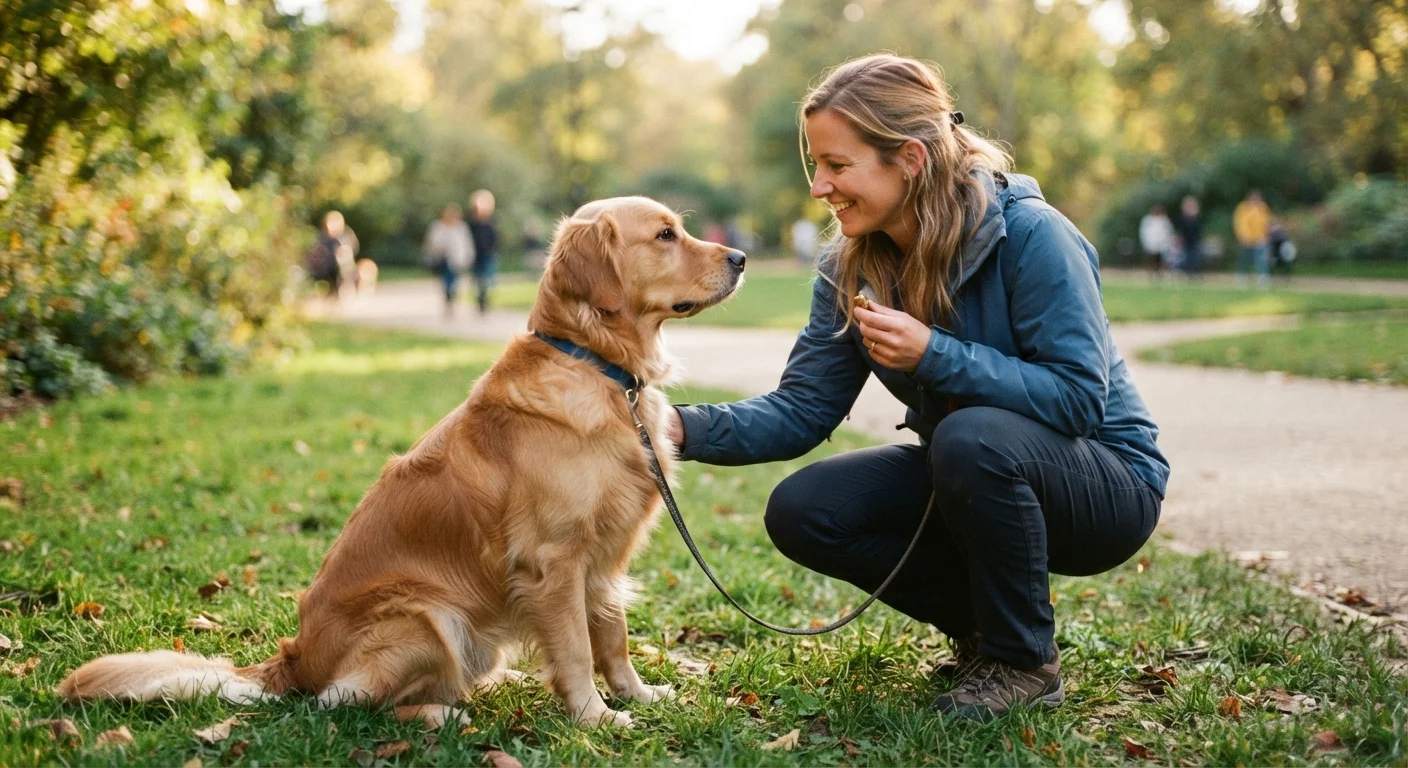
Verbal cue training uses spoken words - both as markers (words like "yes" or "good" said in a consistent tone) and as cues that direct behavior ("sit," "stay," "come"). The spoken marker functions exactly like a clicker, signaling the reward moment. Cue words then become reliable triggers for specific actions once the dog associates them with the behavior through repetition.
To understand why timing and consistency matter so much in both approaches, see the key principles behind effective animal training.
| Criterion | Clicker Training | Verbal Cue Training |
|---|---|---|
| Marker consistency | Identical sound every time | Varies with tone and mood |
| Equipment needed | Clicker device required | No equipment needed |
| Best training phase | Teaching new behaviors | Maintaining learned behaviors |
| Real-world convenience | Requires a free hand | Always available |
| Learning curve for owner | Timing practice needed | Natural but needs consistency |
| Suitable for hearing-impaired dogs | No - needs sound | Yes - pairs with hand signals |
| Cost | Small upfront tool cost | No cost |
Strengths and Limitations of Each Approach
The clicker's primary advantage is precision. Its sound is completely neutral - it never carries frustration, excitement, or fatigue the way a human voice does. Research in applied animal behavior consistently supports the idea that a distinct, non-variable marker accelerates the acquisition of new behaviors, particularly complex or duration-based skills.
Its main limitation is practicality. You need a free hand to operate the device, which can be awkward during leash walks or activities that already demand coordination. The clicker also requires a deliberate transition - called fading the clicker - as the dog progresses, moving toward verbal cues or hand signals for real-world reliability.
Verbal cue training shines in everyday life. Your voice travels with you everywhere, and well-conditioned verbal cues hold up in public, off-leash environments, and complex real-world settings. The challenge is consistency: tone, pace, and emotional state all affect how a verbal marker sounds to a dog. Owners who vary their delivery - saying "yes!" brightly one day and flatly the next - may find their dog's response becomes unreliable. If inconsistent responses are already a problem, find out why dogs ignore commands and how to fix it.
~3-5 sessions
Time to "charge" a clicker marker
Applied behavior specialists generally note that most dogs associate a clicker with reward within a handful of short conditioning sessions.
100%
Consistency of clicker sound vs. human voice
Unlike a human voice, a mechanical clicker produces the same acoustic signal every time, removing variability that can confuse dogs during early learning.
Under 1 second
Ideal marker-to-behavior timing window
Animal behaviorists widely agree that marking the desired behavior within approximately one second is critical for the dog to link the action to the reward.
Combining Both Methods - and Knowing When to Seek Help
Many experienced dog owners and trainers use both methods in a complementary way. A common progression looks like this: start with a clicker to teach a new behavior with precision, then fade the clicker once the behavior is solid, relying on verbal cues for daily maintenance. This approach captures the speed benefits of a clear marker without sacrificing real-world practicality.
Regardless of which method you choose, some training goals - reactive behavior, aggression, severe anxiety - are best addressed with professional guidance. If you are weighing whether to train on your own or bring in a professional, explore the trade-offs between DIY training and hiring a professional. For those considering a structured environment, compare group classes and private dog training sessions to find the right fit.
A Note on Marker Words vs. Cue Words
In verbal training, it helps to keep your marker word (e.g., "yes") separate from your directional cues (e.g., "sit"). Using the same word in multiple roles can blur the signal for your dog. Pick a short, distinct marker word and use it only to mark correct behavior - never as a general term of praise or affection. For a fuller explanation of these distinctions, see common pet training terms every owner should understand.
This article provides general educational information about dog training methods and is not a substitute for personalized guidance from a certified professional dog trainer or veterinary behaviorist.