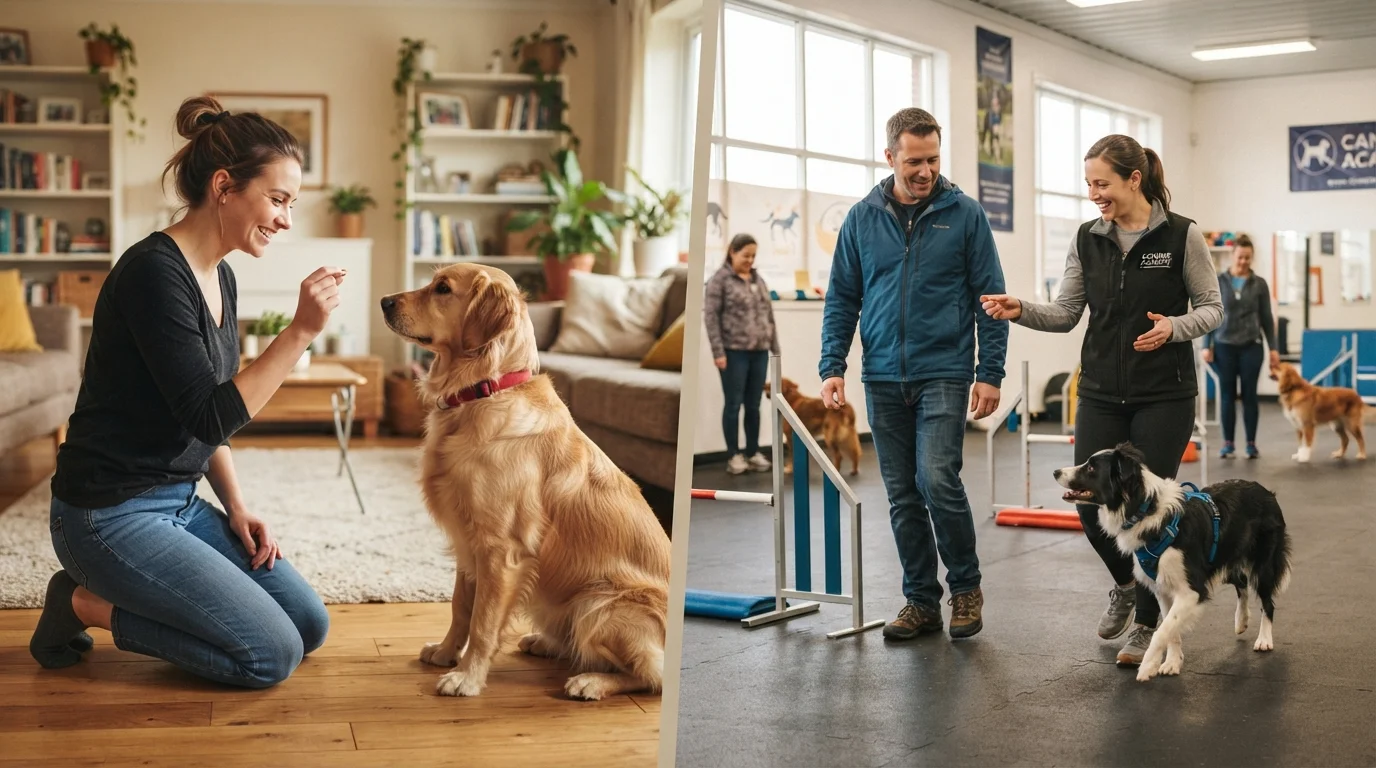
The Case for Training Your Pet Yourself
Self-guided training has real advantages that go beyond saving money. When you train your own pet, you're the one building the relationship, reading the responses, and reinforcing the rules consistently in your own home environment. That context matters - a dog or cat that learns cues from you is learning to respond to you specifically, which often makes everyday compliance more reliable.
Modern resources have also lowered the barrier considerably. Evidence-based books, veterinarian-endorsed video courses, and detailed online communities mean that a motivated owner can access solid positive reinforcement methodology without a significant budget. Before jumping in, though, it's worth running through a preparation checklist - see our training preparation guide to ensure your environment and expectations are set up for success.
Lower cost than hiring a professional trainer
Most basic training resources - books, online videos, and community forums - are free or low-cost. Even structured online courses are a fraction of the price of private professional sessions.
Strengthens your bond with your pet
Training is an interactive process that builds communication and mutual trust. Working through challenges together deepens the owner-pet relationship in ways that passive observation of a trainer cannot replicate.
Training happens in your real-life environment
Skills practiced at home generalize more readily to everyday situations in that same space. This is especially useful for household manners like staying off furniture or coming when called indoors.
Flexible scheduling on your own timeline
DIY training can fit around work, family, and other commitments without requiring appointments. Short, frequent sessions - often more effective than long formal ones - are easy to build into a daily routine.
Owner develops lasting training skills
Learning to train your pet teaches you to read animal body language and apply reinforcement principles - skills that pay off for the lifetime of your pet and any future animals.
DIY training works best for foundational skills: sit, stay, come, leash manners, and basic crate acceptance. If you have a generally sociable, healthy pet and the patience to keep sessions short and frequent, you may never need to pay for professional instruction at all.
The Limitations of Going It Alone
The biggest risk with DIY training isn't lack of effort - it's unintentionally practicing the wrong thing. Timing errors in reinforcement, inconsistent cue words, or misreading a pet's stress signals can quietly embed habits that are harder to undo later. What feels like progress in week two can become a stubborn pattern by month three.
Easy to reinforce unwanted behaviors accidentally
Without a trained eye, owners commonly reward behaviors at the wrong moment, creating confusion for the pet. Poor timing in positive reinforcement can teach the opposite of the intended lesson.
Limited effectiveness for complex behavioral issues
Reactivity, aggression, and anxiety-based behaviors require specialized behavioral knowledge to address safely. Amateur handling of these issues can escalate problems rather than resolve them.
Progress can stall without expert feedback
When a training approach isn't working, it's difficult to self-diagnose the cause. A professional can identify and correct the issue in a single session that months of solo effort might not resolve.
Requires significant consistent time investment
Effective training demands regular, structured sessions over weeks or months. Owners with unpredictable schedules or multiple demands may struggle to maintain the consistency that produces results.
Risk of using outdated or harmful methods
Online sources vary widely in quality and some promote dominance-based or aversive methods that behavioral science no longer supports. Without guidance, owners may inadvertently choose approaches that damage trust.
Behavior problems rooted in fear, anxiety, or past trauma require a different skill set entirely. Reactivity toward other dogs, resource guarding, and separation anxiety are areas where well-intentioned amateur approaches can make the problem worse. If your pet falls into one of these categories, professional involvement is strongly worth considering - and the comparison of group classes vs. private sessions can help you figure out which professional format fits your situation.
Owners of puppies face a particular time sensitivity: early socialization windows close, and habits form fast. Our complete puppy training guide covers what those early milestones look like and when to prioritize them.
When a Professional Trainer Is Worth the Investment
Professional trainers - particularly those credentialed through recognized organizations like the Certification Council for Professional Dog Trainers (CCPDT) or the International Association of Animal Behavior Consultants (IAABC) - bring structured assessment, consistent methodology, and the ability to spot what an untrained eye misses.
How to Check a Trainer's Credentials
Not all trainers hold equivalent qualifications. Look for credentials from recognized bodies such as the CCPDT or IAABC, and ask prospective trainers directly about their methods. Trainers who rely exclusively on positive reinforcement and are transparent about their approach are generally aligned with current behavioral science. Avoid anyone who uses or recommends aversive tools without clear clinical justification from a veterinary behaviorist.
The investment in a few professional sessions often shortens the overall training timeline significantly, which can make it cost-effective even for owners primarily motivated by budget. A trainer who identifies a misunderstood cue or a reinforcement timing problem in session one saves you weeks of unproductive repetition at home.
Professional help is particularly well-suited to older pets with established patterns. Contrary to popular belief, adult dogs can absolutely learn new behaviors - our guide to training older dogs explains what realistically changes with age and what stays the same.
~25%
Dogs rehomed due to behavioral problems
Behavioral issues - many of which are addressable through training - are consistently cited among the leading reasons dogs are surrendered to shelters, according to studies in veterinary behavioral literature.
4-6 weeks
Typical timeline for foundational skill acquisition
With consistent daily practice, most dogs can reliably perform basic cues within four to six weeks, according to general guidance from certified applied animal behaviorists.
Building a Practical Hybrid Strategy
For many owners, the most pragmatic approach combines both paths: use a professional trainer to assess the pet, establish a clear methodology, and address any immediate behavioral concerns - then maintain and build on that foundation independently. This hybrid model keeps costs manageable while still leveraging expertise where it counts most.
Keeping your own sessions effective over time requires active effort. Short sessions, meaningful rewards, and varied activities all contribute to a pet that stays engaged. Explore strategies for keeping training sessions engaging to prevent the plateau that often hits around the two-month mark.
If you're unsure which training method to anchor your approach around, it's also worth understanding the tools available. Clicker training versus verbal cue training is one foundational choice that can shape the consistency of your entire program. The right approach depends on your pet's learning style and your own comfort with the tools.
This article provides general educational information about pet training options and is not a substitute for individualized advice from a qualified animal behaviorist or veterinarian.