Understanding the Core Trade-Off
The debate between open shelving and closed cabinetry is fundamentally about two competing priorities: visual openness versus practical concealment. Neither option is universally superior - the right choice depends on how you actually live in your space, not just how you want it to look in photos.
Open shelving removes the door barrier between storage and the room, merging function with display. Closed cabinetry creates a clean visual boundary, tucking away the contents of daily life. Understanding the vocabulary behind these choices - such as concepts like negative space, visual weight, and proportion - can sharpen your decision-making. Our guide to interior design concepts explains these terms in plain language if you want a deeper foundation before committing to a direction.
| Criterion | Open Shelving | Closed Cabinetry |
|---|---|---|
| Visual effect | Airy, open, display-forward | Clean, contained, uniform |
| Maintenance demand | High - frequent dusting and styling | Low - contents stay protected |
| Clutter concealment | None - everything is visible | Complete - doors hide contents |
| Typical upfront cost | Generally lower | Generally higher |
| Installation complexity | Often DIY-friendly | Usually requires professional help |
| Storage capacity | Limited by visible space | Maximized per square foot |
| Resale appeal | Mixed - style-dependent | Broadly preferred by buyers |
| Best room fit | Kitchens, living rooms, offices | Kitchens, bathrooms, bedrooms |
Where Each Option Performs Best by Room
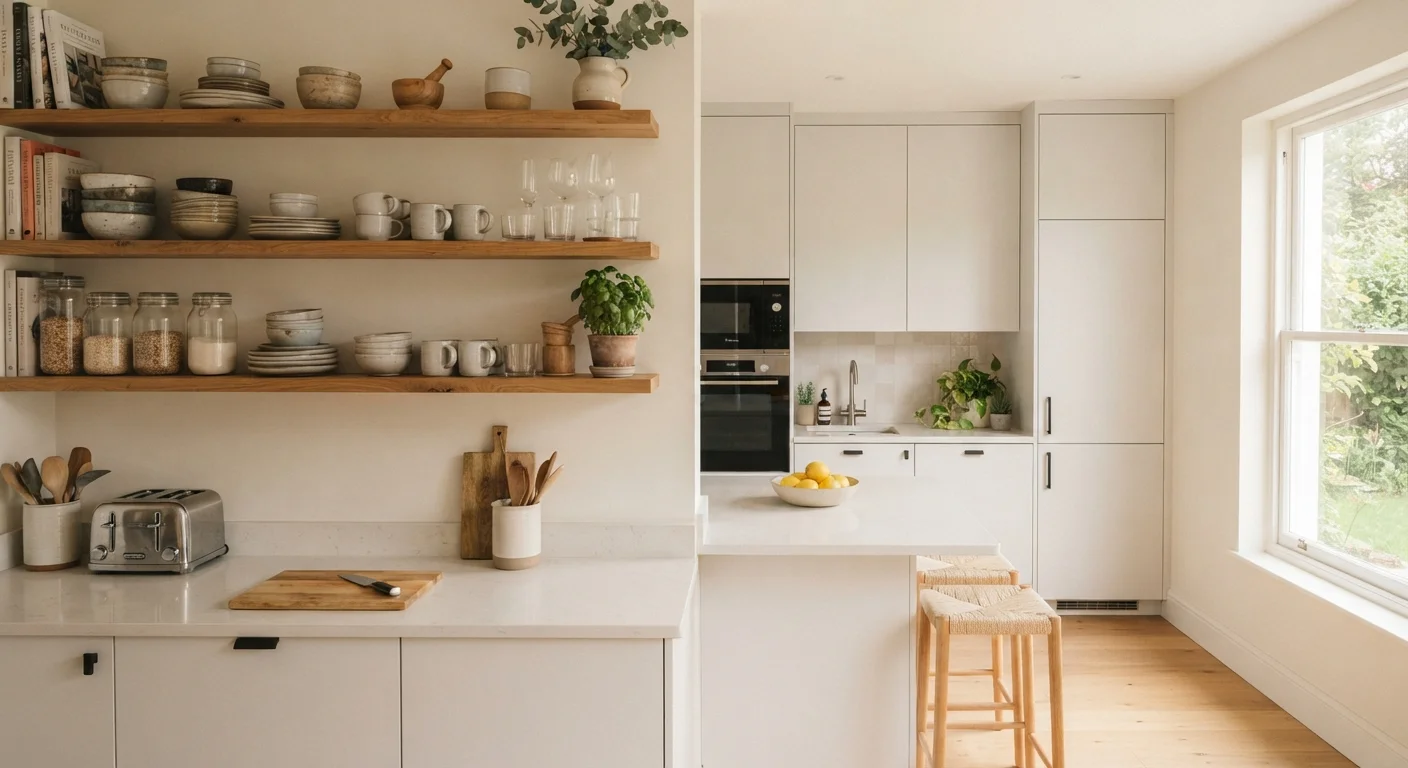
Kitchens are where this debate is most heated. Open shelves above the countertop can feel airy and café-like, but they expose everything to grease, steam, and dust - meaning items need regular cleaning and deliberate arrangement. Closed upper cabinets keep this maintenance to a minimum. A hybrid approach - open shelves for glassware and closed cabinets for pantry items - is increasingly popular and addresses the weaknesses of both extremes.
Living rooms benefit from open shelving when the goal is to display books, plants, or objects that reflect personality. However, if a room already feels busy or the furniture arrangement is still being worked out, adding open storage can amplify the sense of visual disorder. If your living room still feels unsettled even after decorating, this breakdown of common styling missteps may identify the underlying issue before you commit to new shelving.
Bedrooms, particularly smaller ones, present a strong case for closed storage. Wardrobes and closed dressers contain the visual complexity of clothing and personal items, which supports a calmer atmosphere. That said, a few well-placed open shelves for books or décor can add character without overwhelming a small footprint. See our practical guide to small bedroom styling for layout strategies that pair well with either storage choice.
~30%
Kitchen renovations that include open shelving
Houzz's annual kitchen trends reports have consistently shown roughly a third of remodeled kitchens incorporate some open shelving, often alongside closed storage.
2-3×
Cost difference: custom cabinets vs. floating shelves
Home improvement industry estimates generally place custom cabinetry at two to three times the cost of equivalent floating shelf installations, though prices vary significantly by region and material.
Cost, Installation, and Long-Term Practicality
Floating shelves are among the more accessible home updates in terms of upfront cost. Basic bracket-and-board installations can often be handled as a DIY project for a fraction of what custom cabinetry costs. However, wall type matters: installing into drywall without hitting studs requires appropriate anchors, and masonry or plaster walls call for different hardware entirely. If you're unsure about your wall construction, consulting a professional before drilling is a sensible precaution.
Custom or semi-custom closed cabinetry represents a larger investment, but it maximizes usable storage volume, can be tailored to specific dimensions, and typically adds more durable value in high-use areas like kitchens and bathrooms. Stock cabinetry sits in the middle - less expensive than custom, more polished than DIY shelving - and suits budget-conscious renovations where a cohesive look matters.
It's worth applying the same practical skepticism here that applies to other home decisions. Just as common decorating myths can lead homeowners to overspend or make the wrong visual choices, assumptions about open shelving always being cheaper - or always looking better - can lead to regret. Factor in styling time, cleaning frequency, and long-term storage needs alongside the initial price tag.
This article provides general home décor guidance for informational purposes only. Installation requirements, material costs, and structural considerations vary by home. For complex or structural work, consult a qualified professional and verify any permit requirements with your local authority.